


Shipping:
Free Shipping Included
Delivery:
Estimated 2-15 Business Days
Payments:
Credit Card, Check, Cash, PayPal, Apple Pay, Venmo
Returns:
30 Days 100% Money Back Guarantee, Buyer Pays Return Shipping
Description
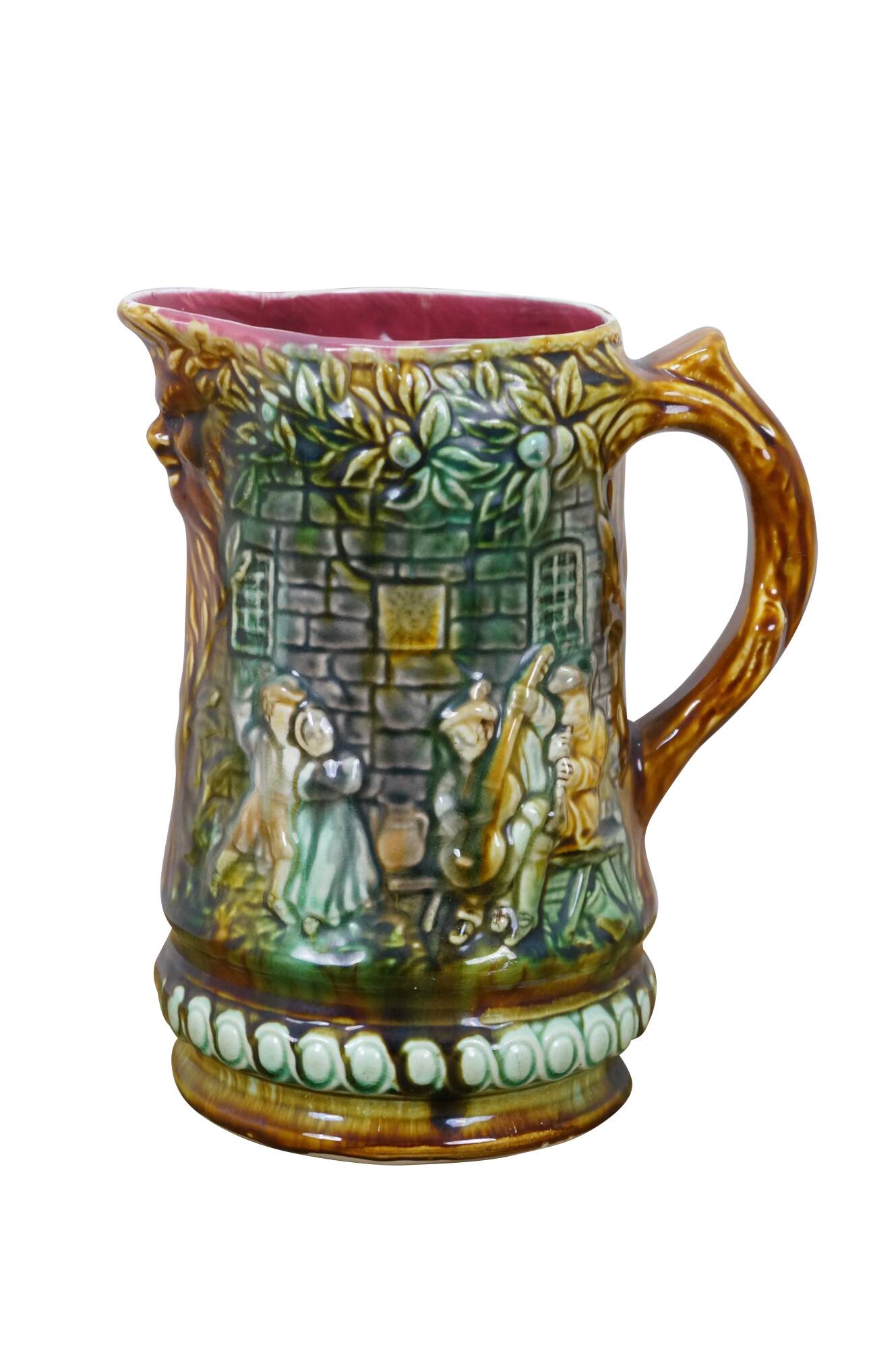
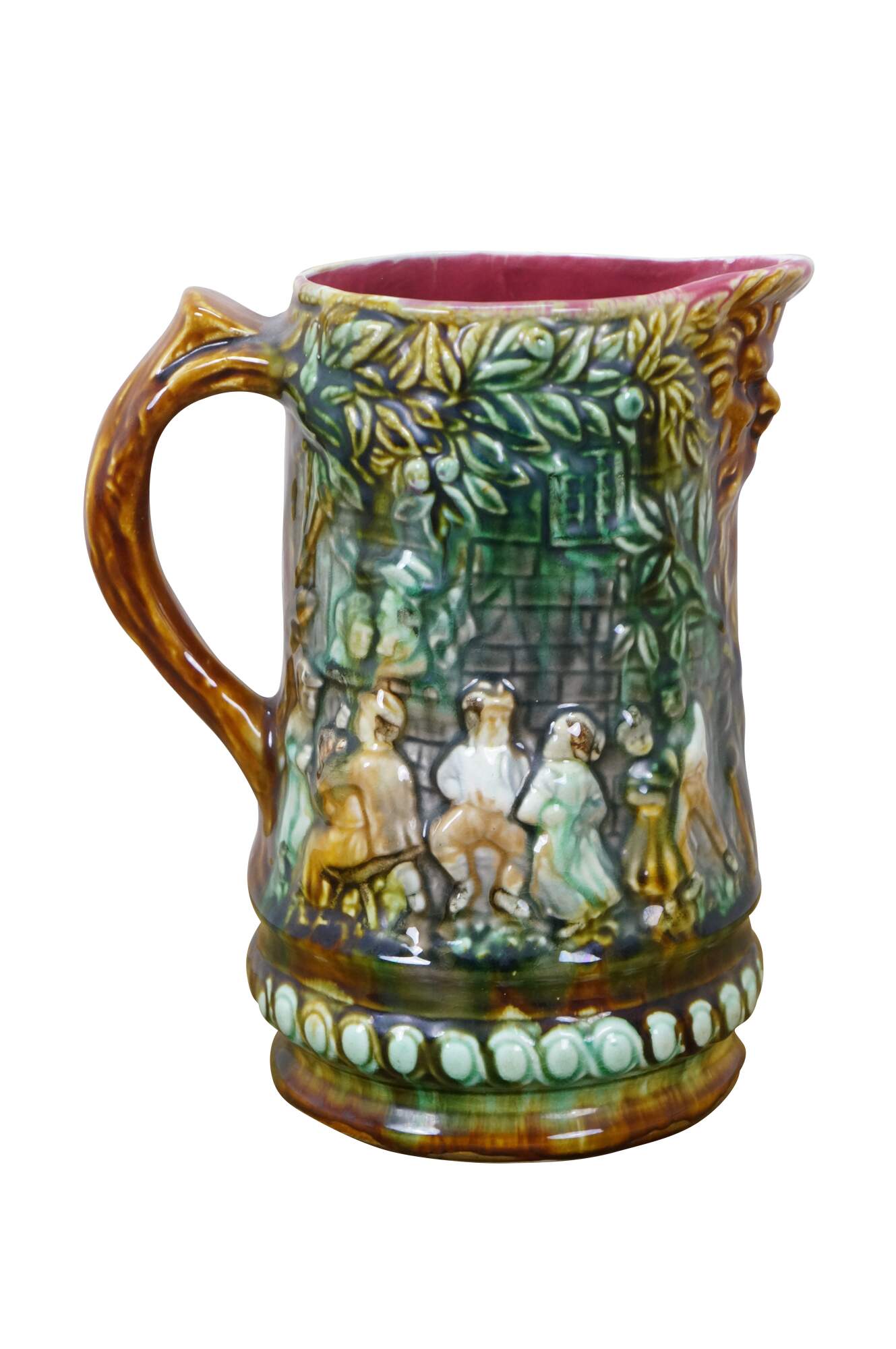
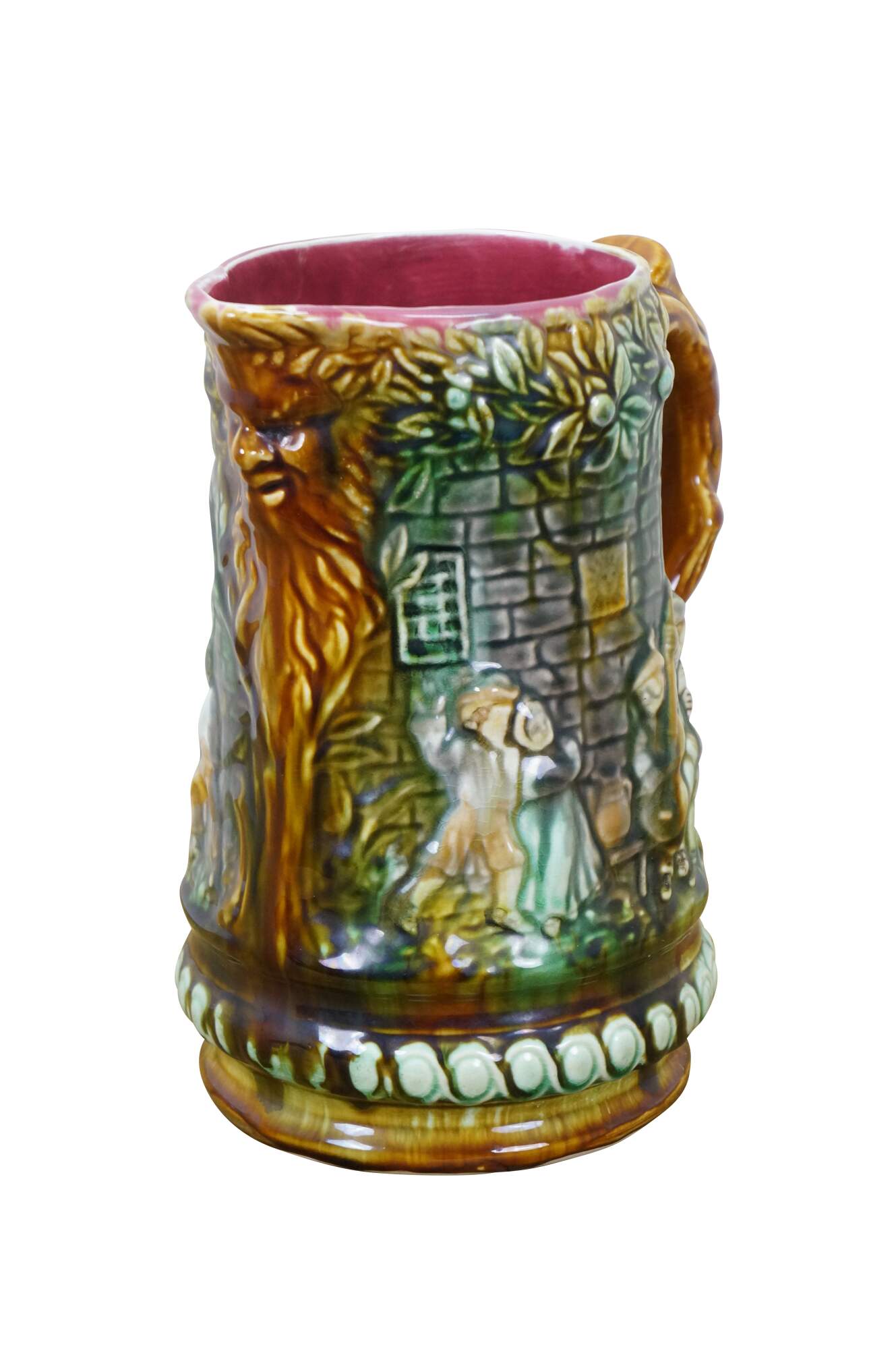
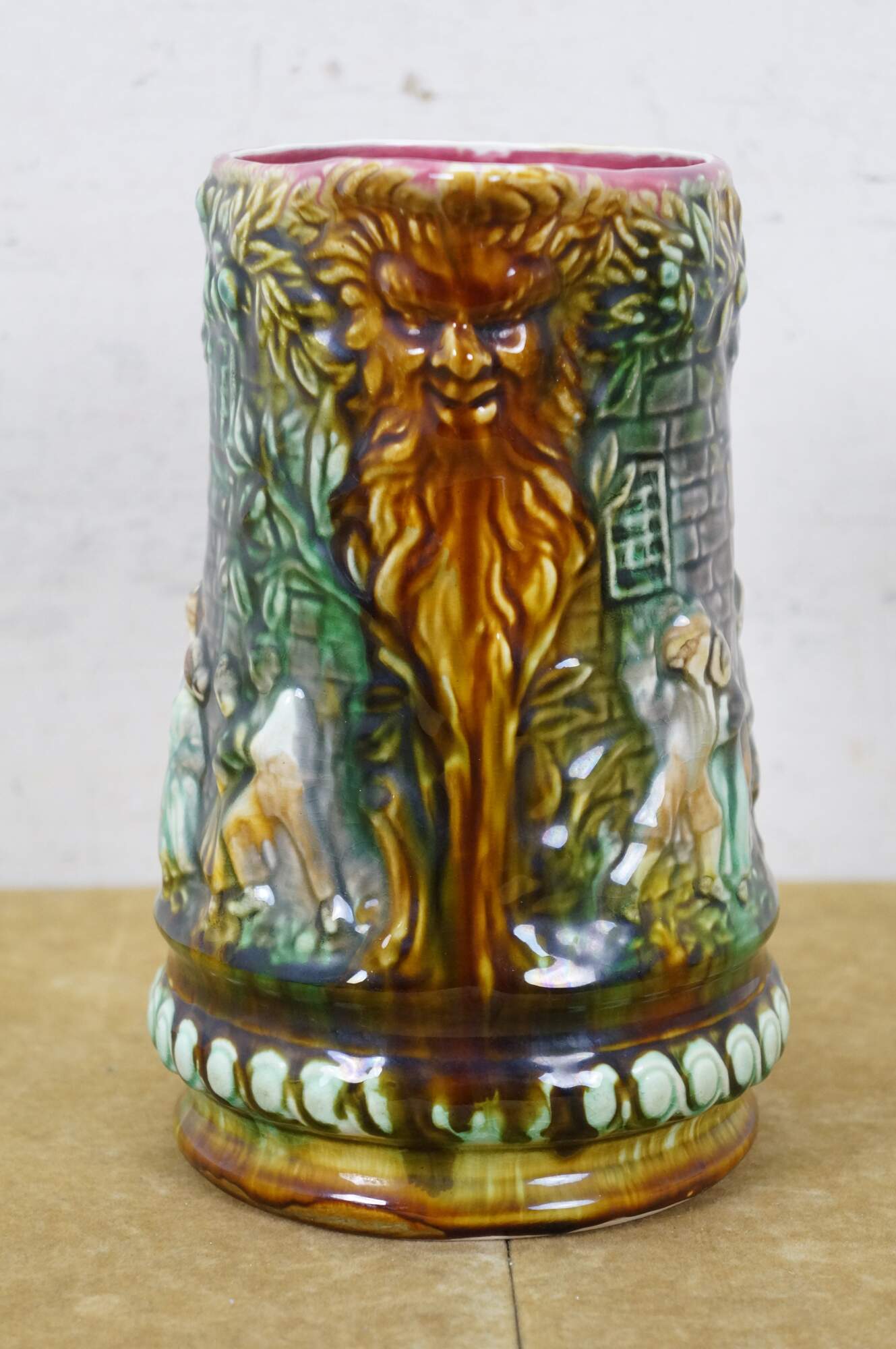
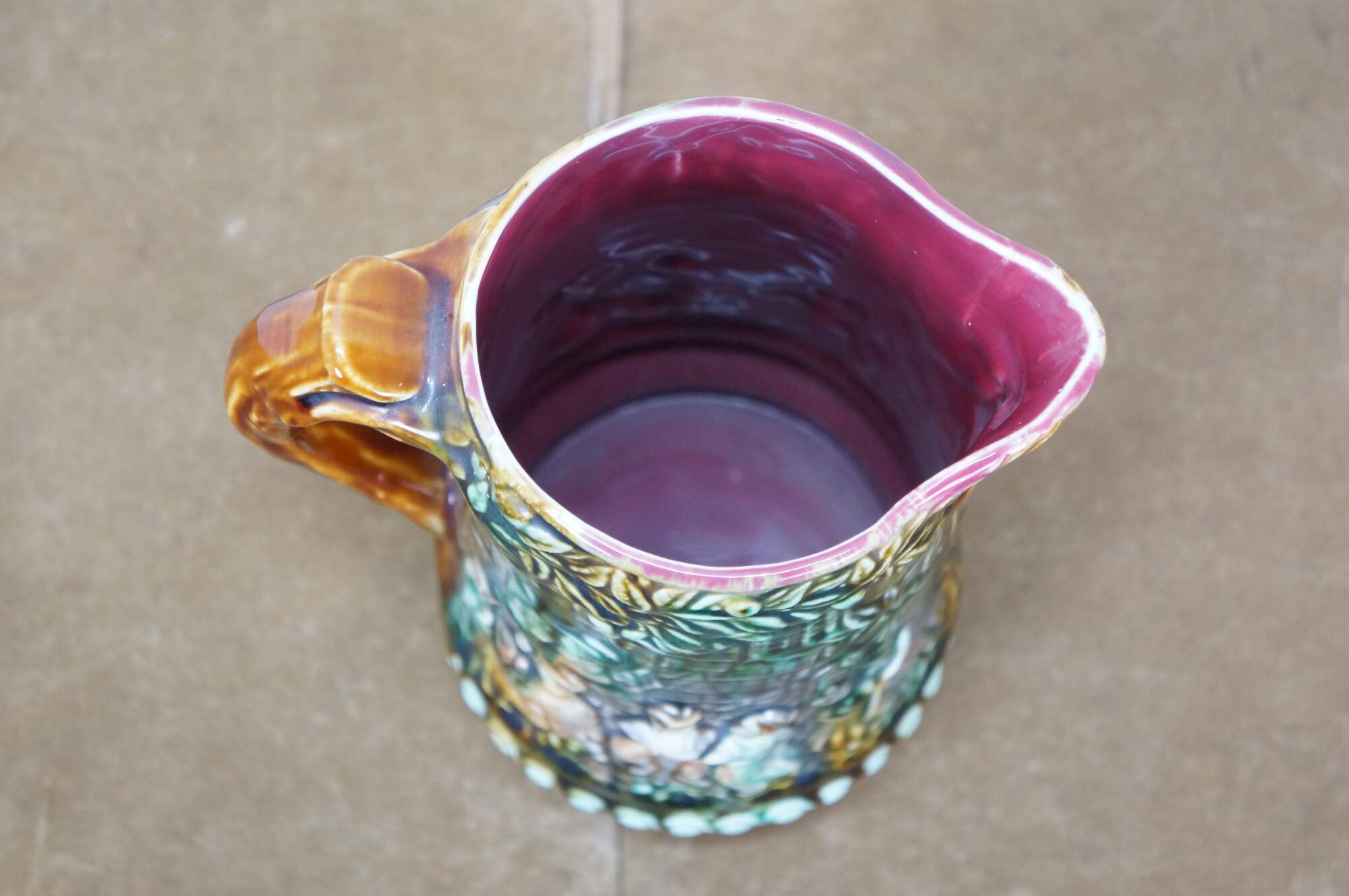
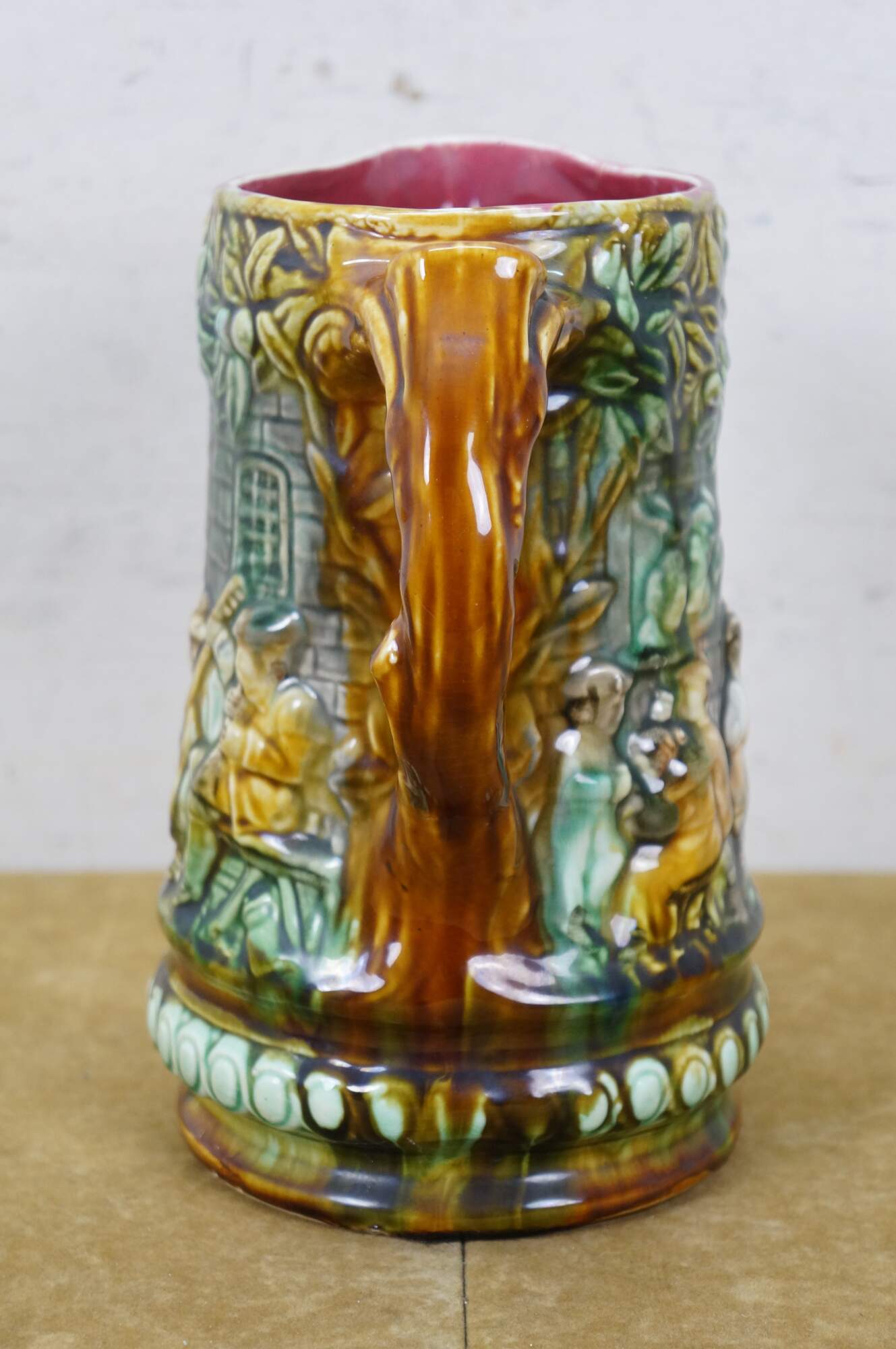
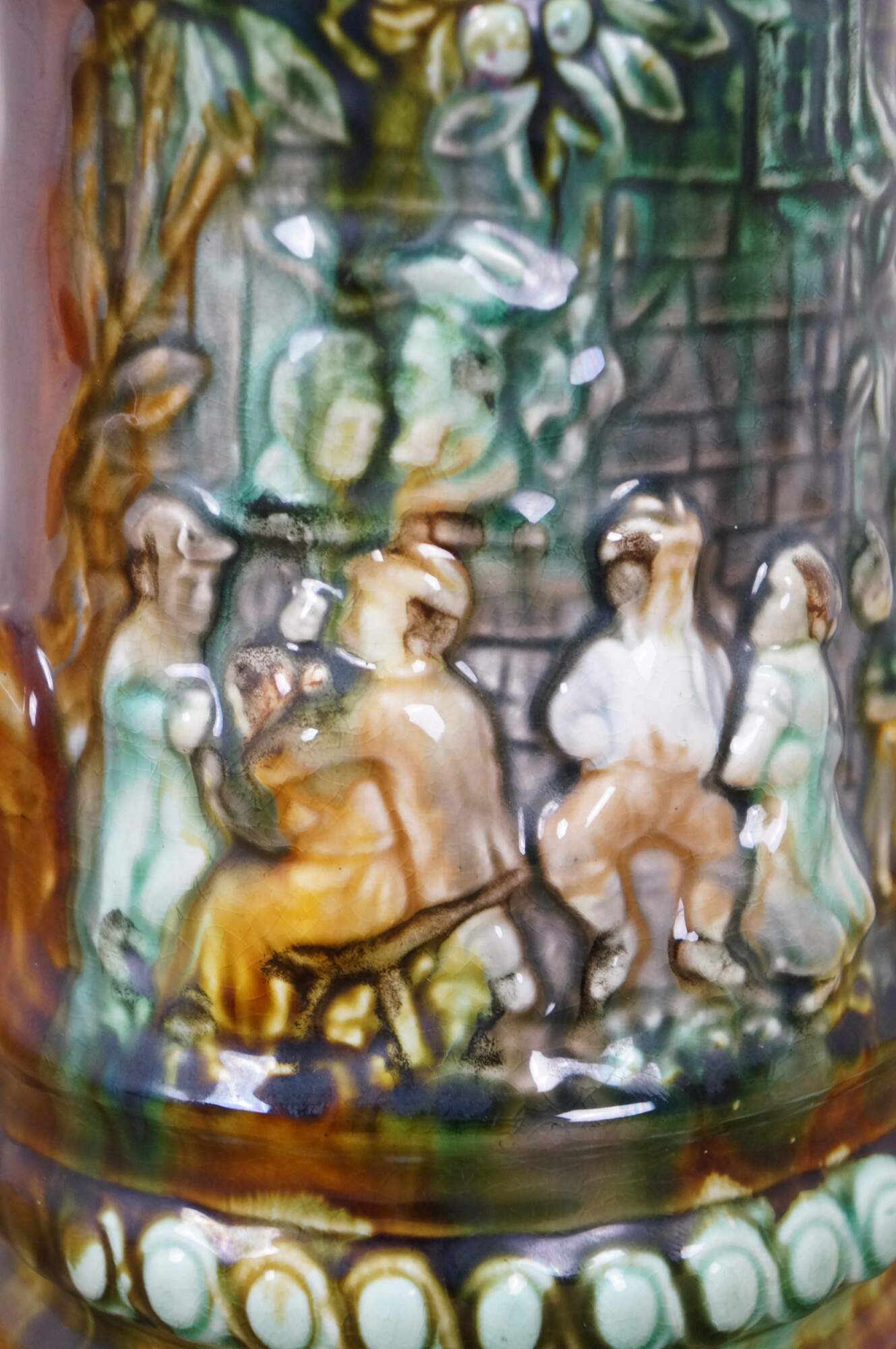
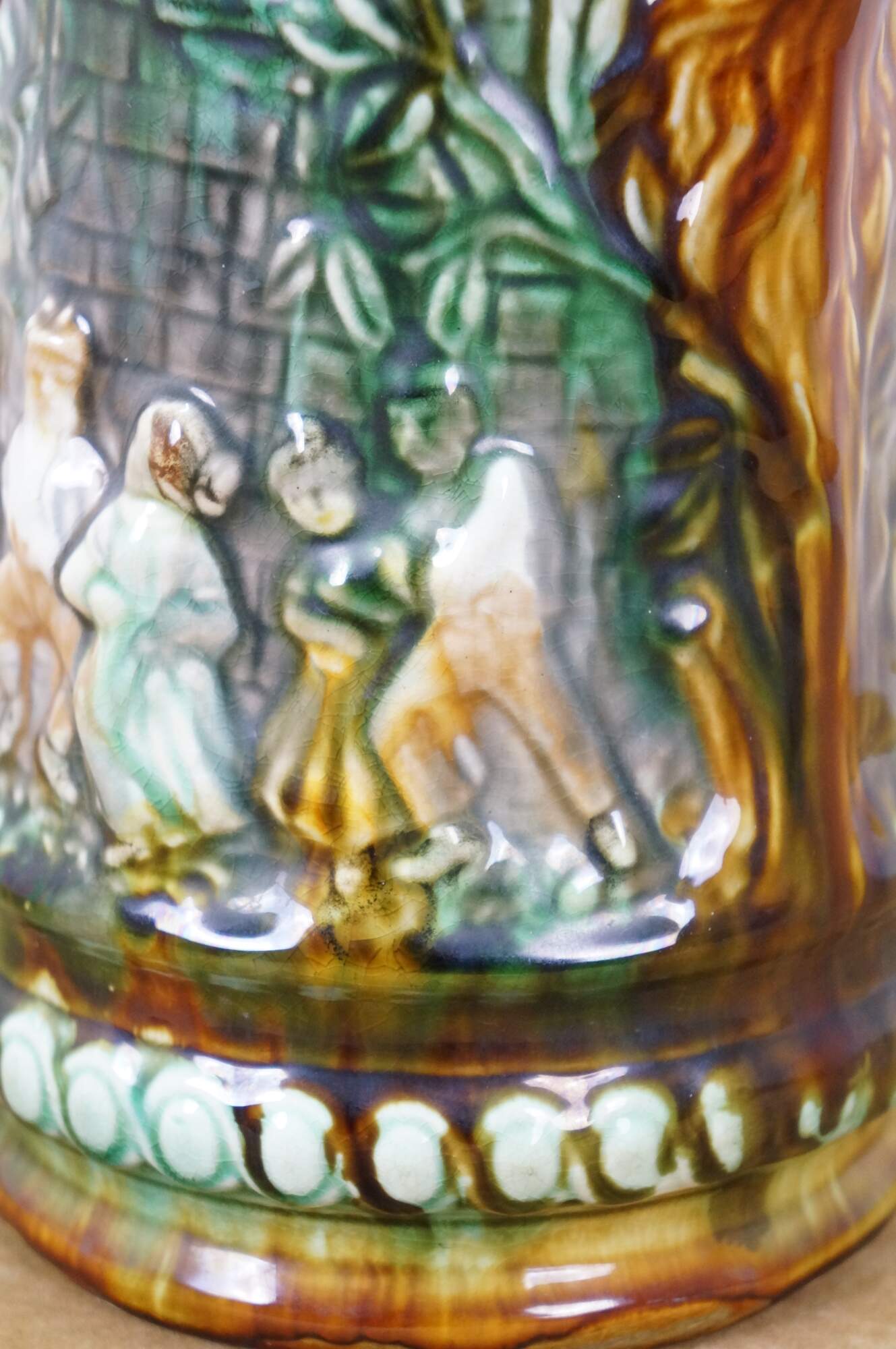
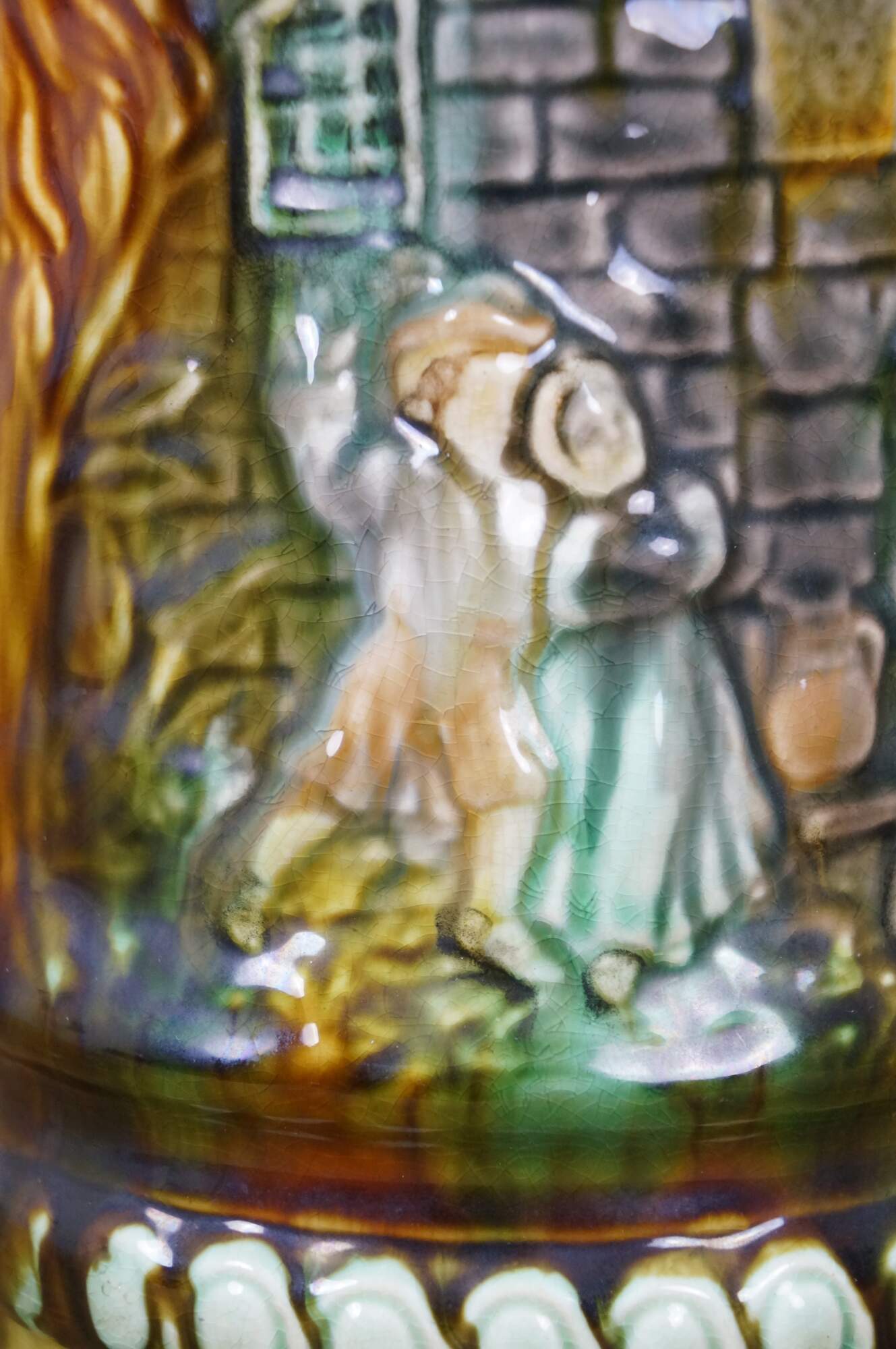
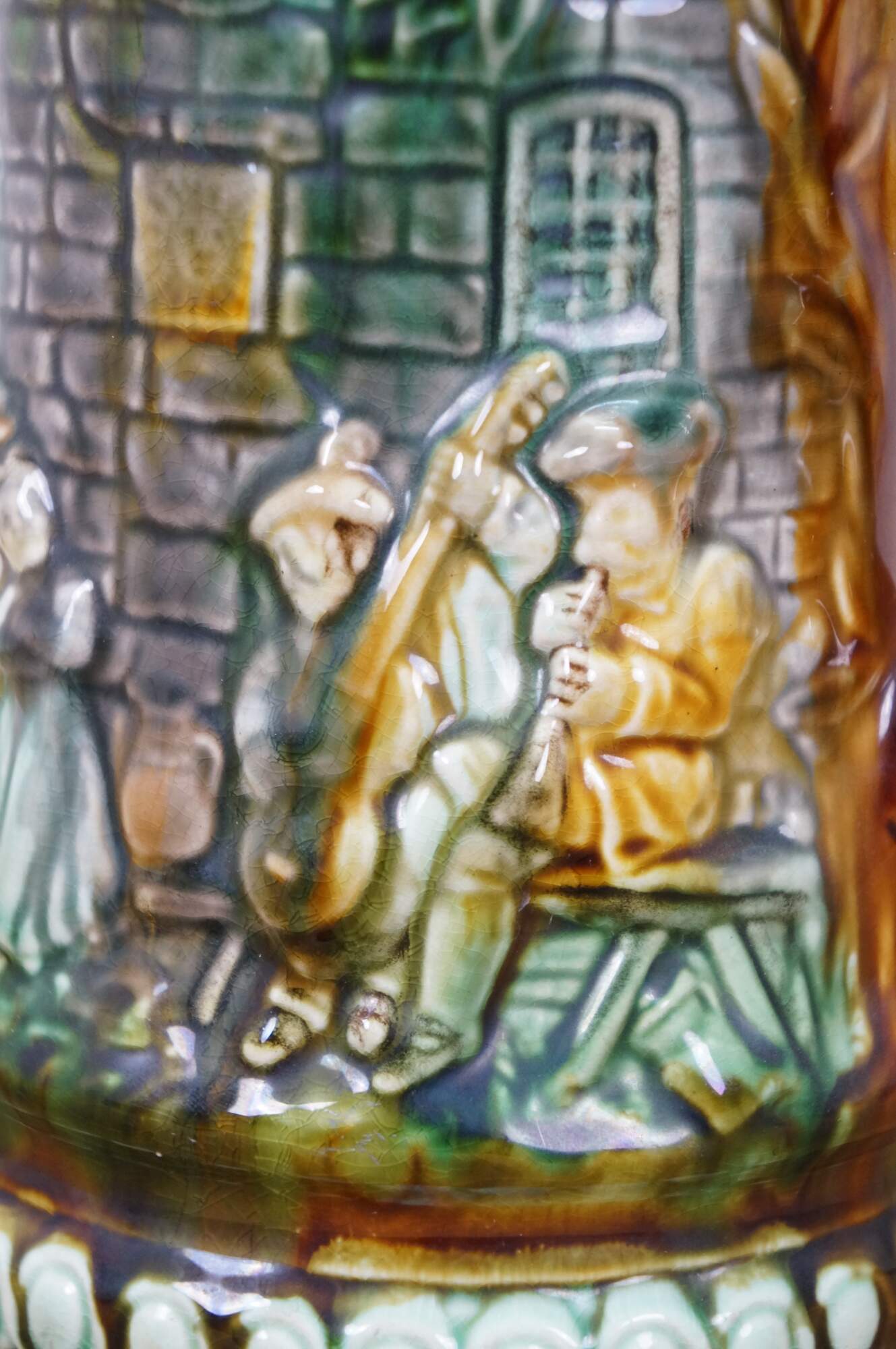
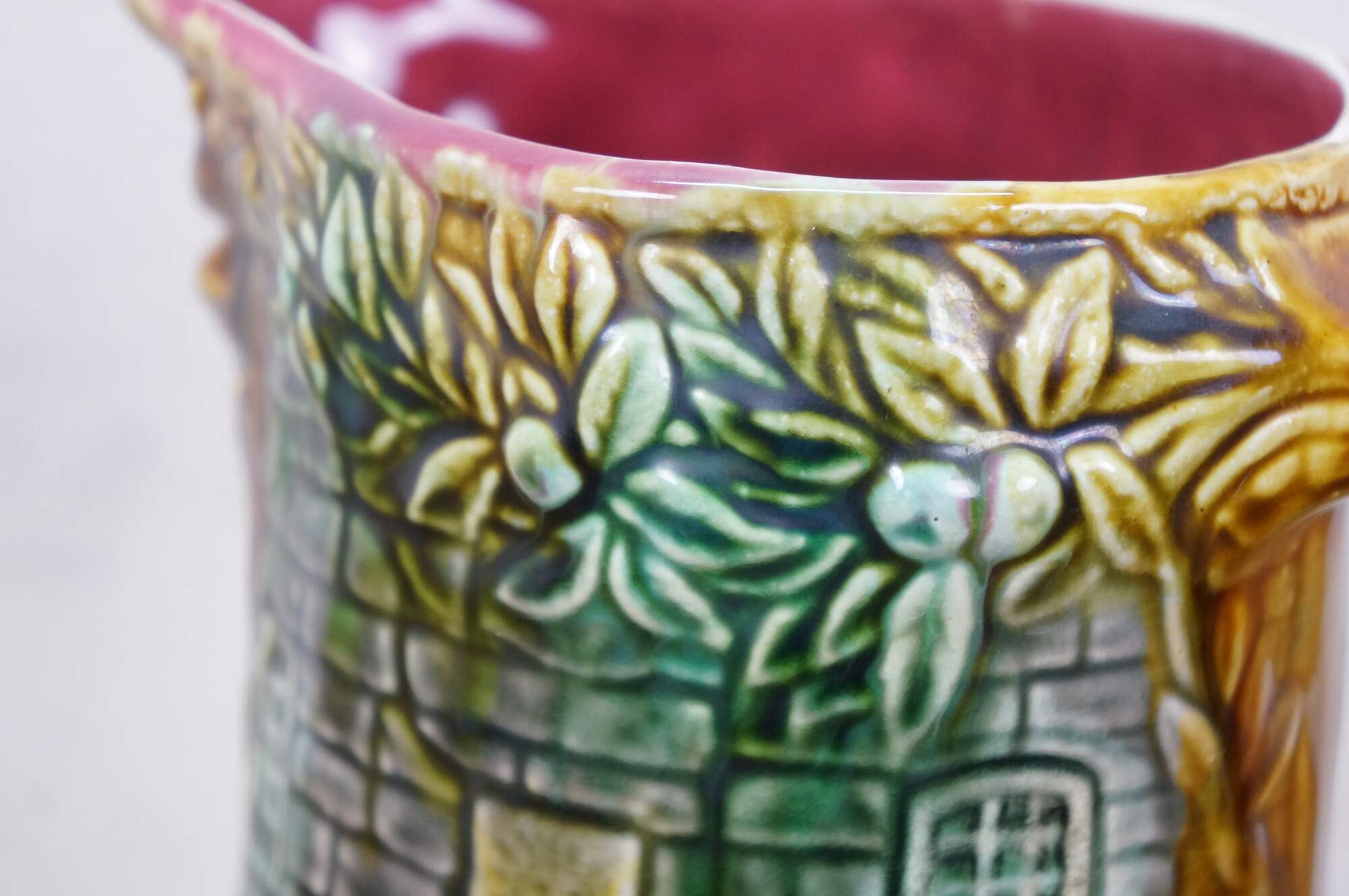
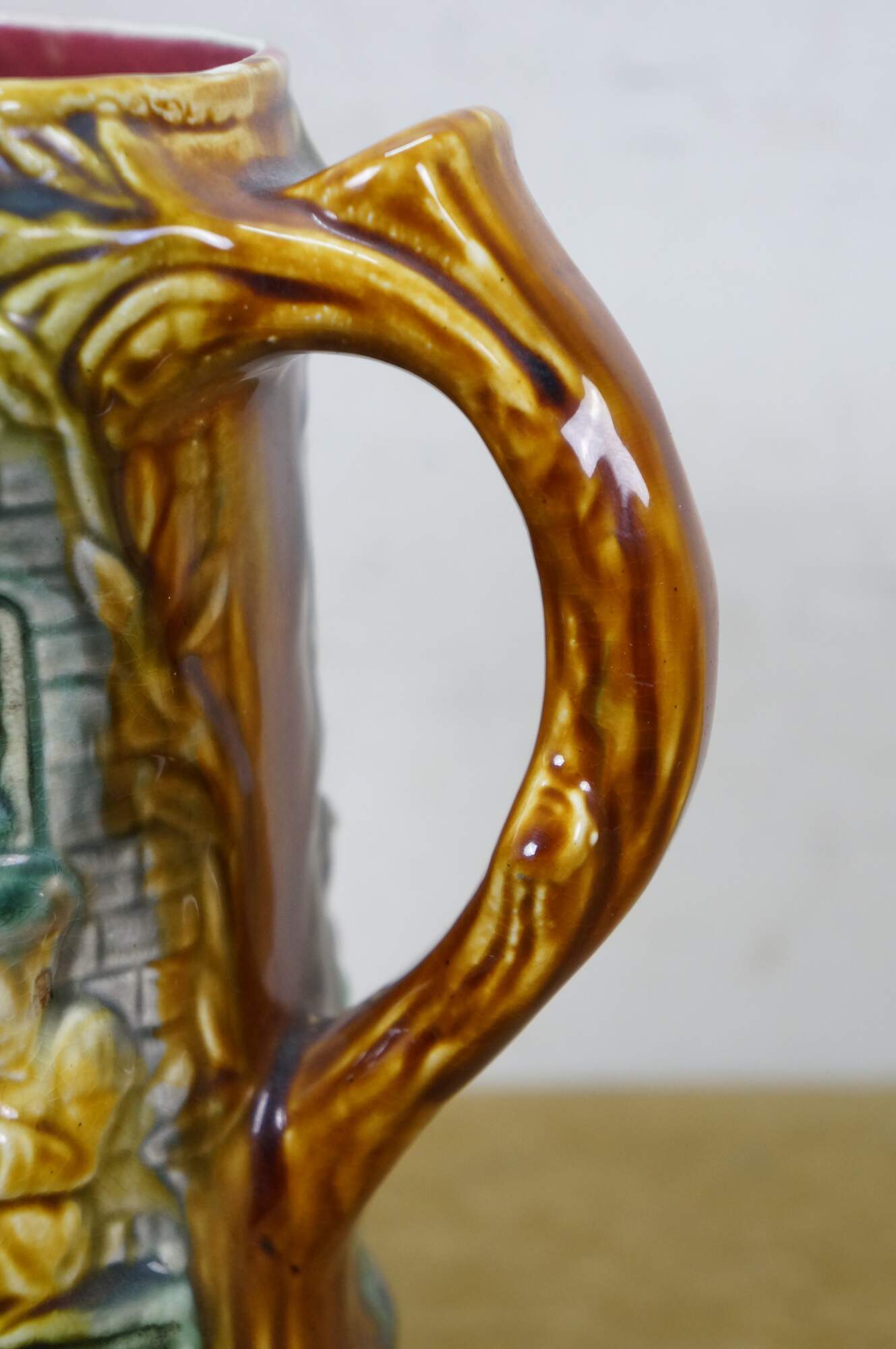
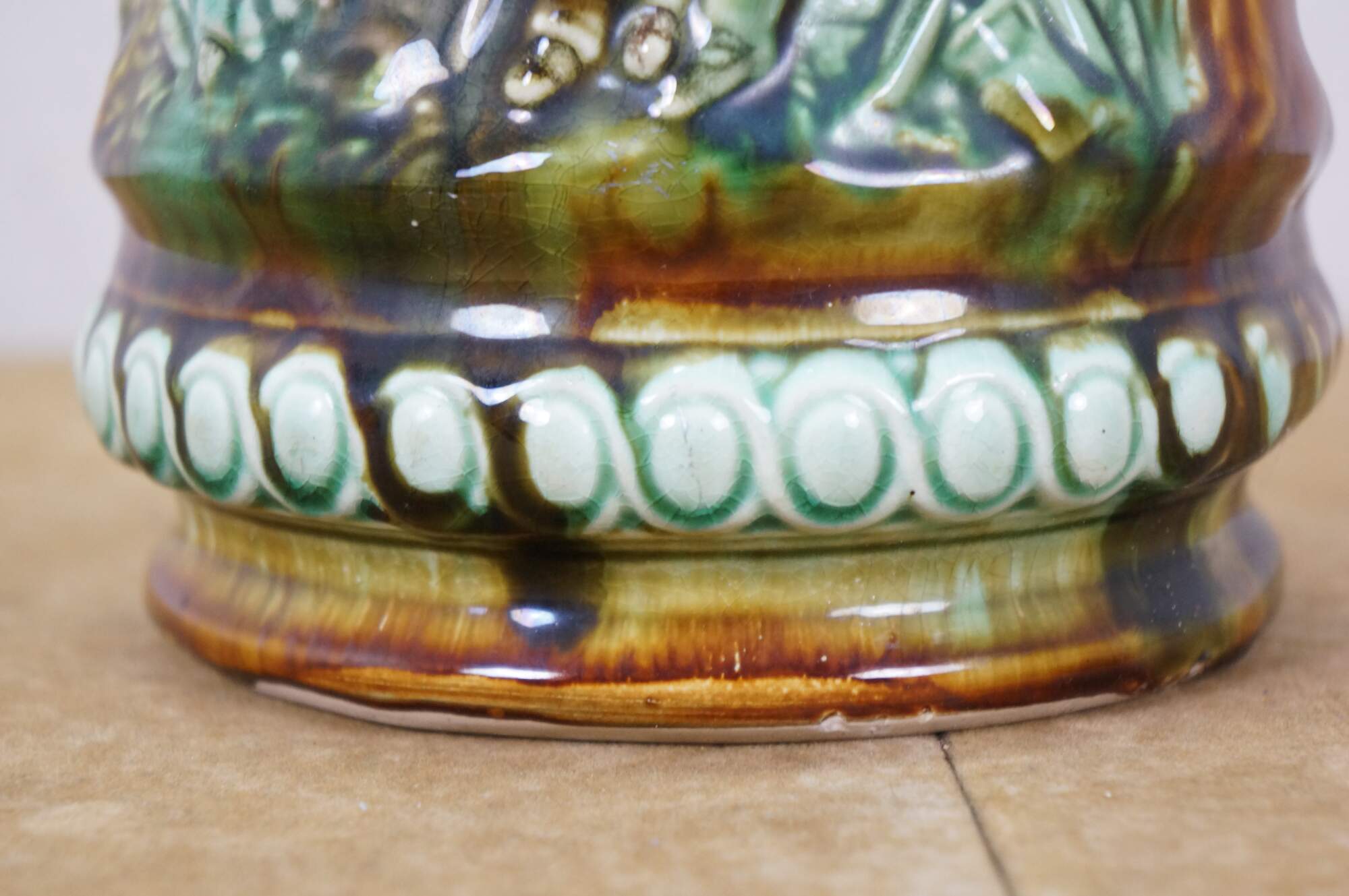
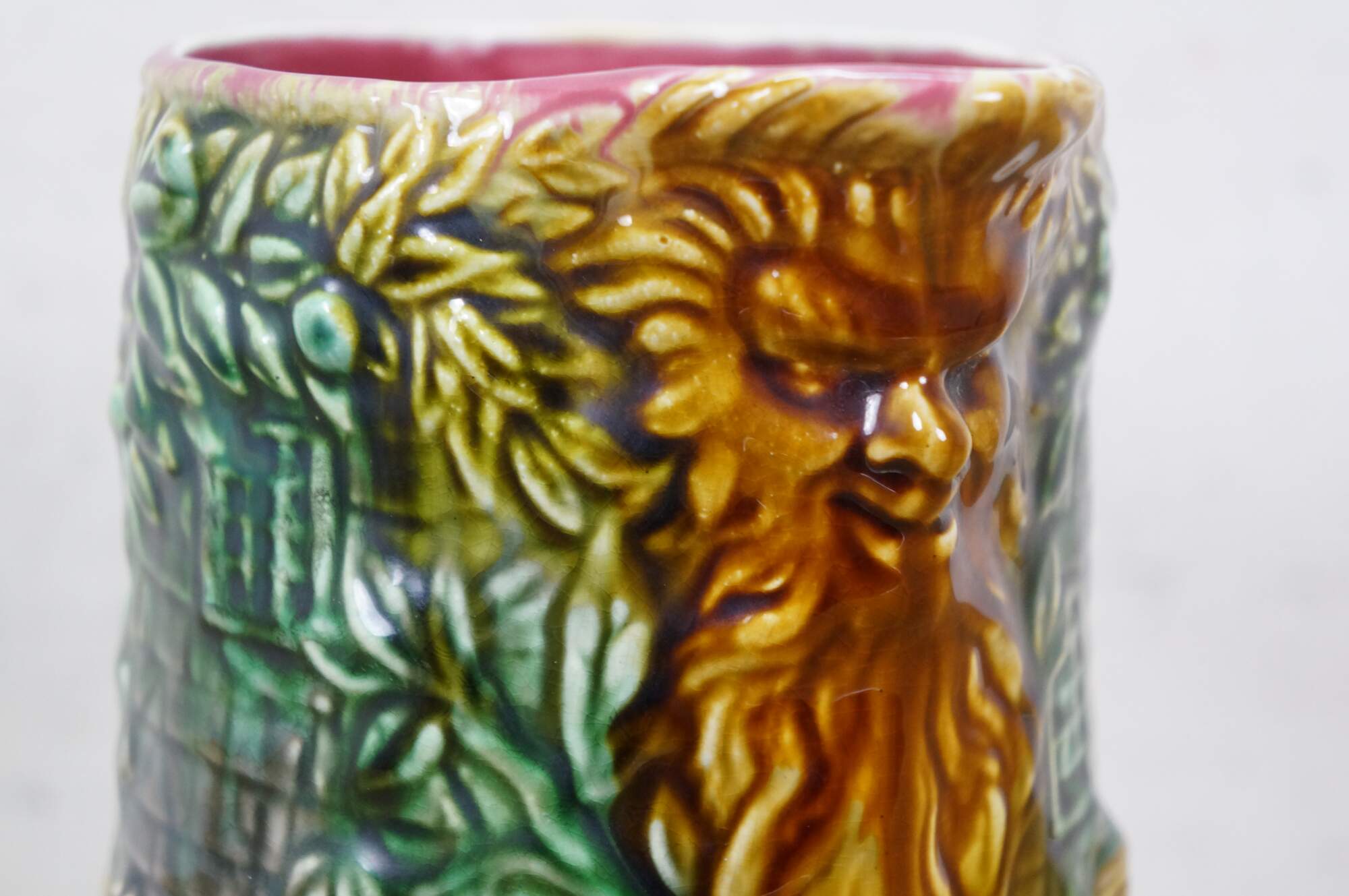
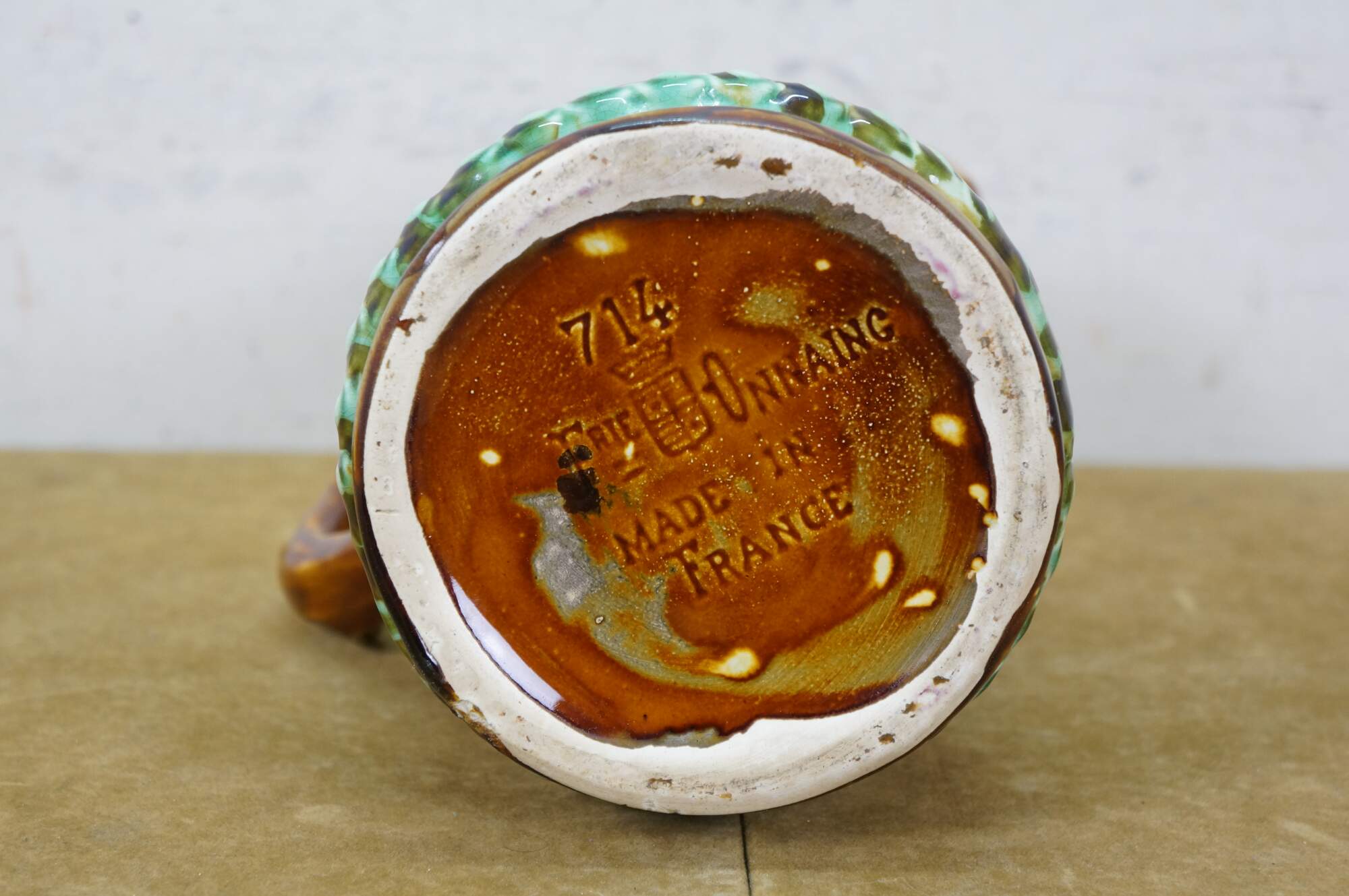
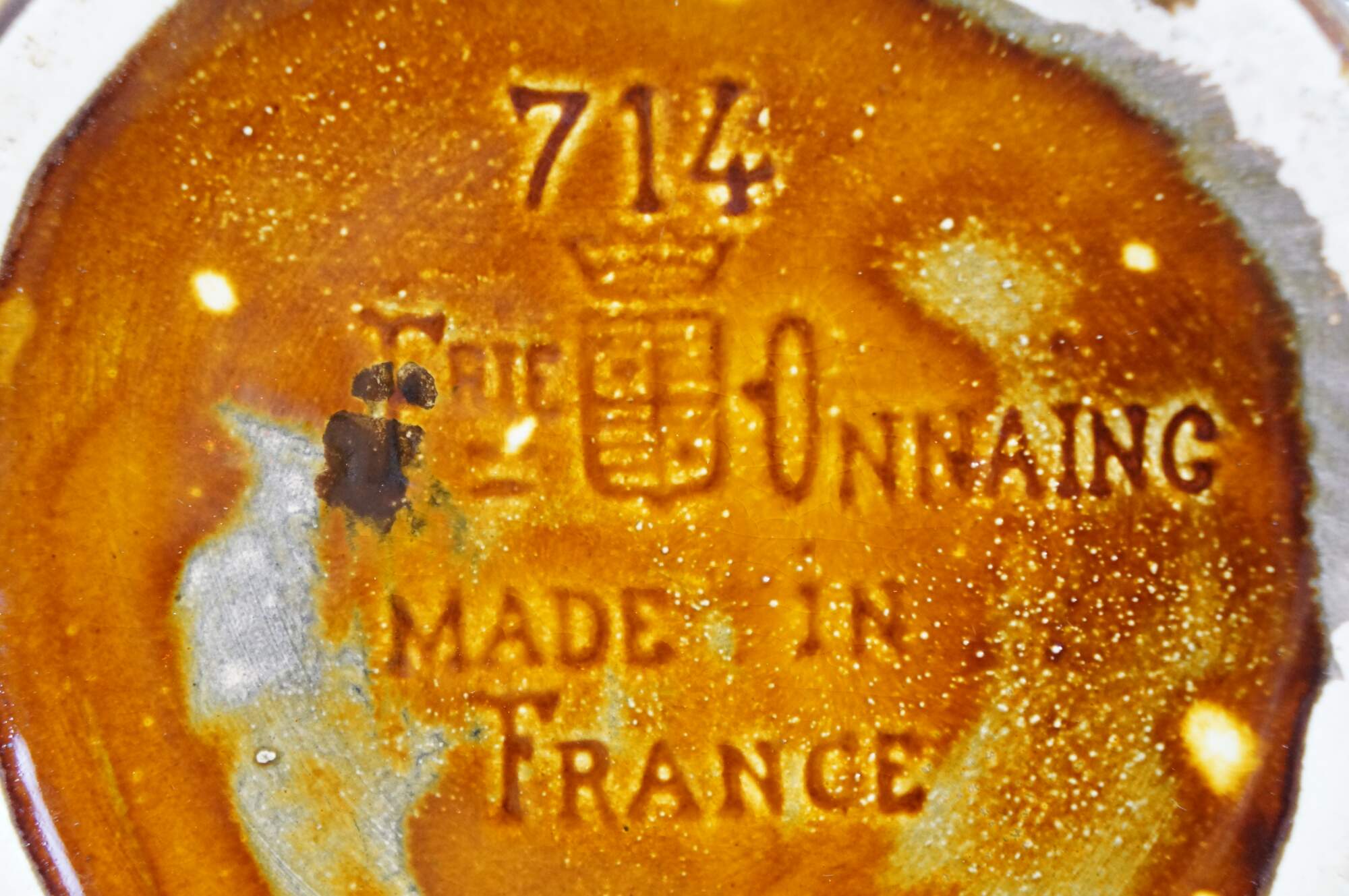
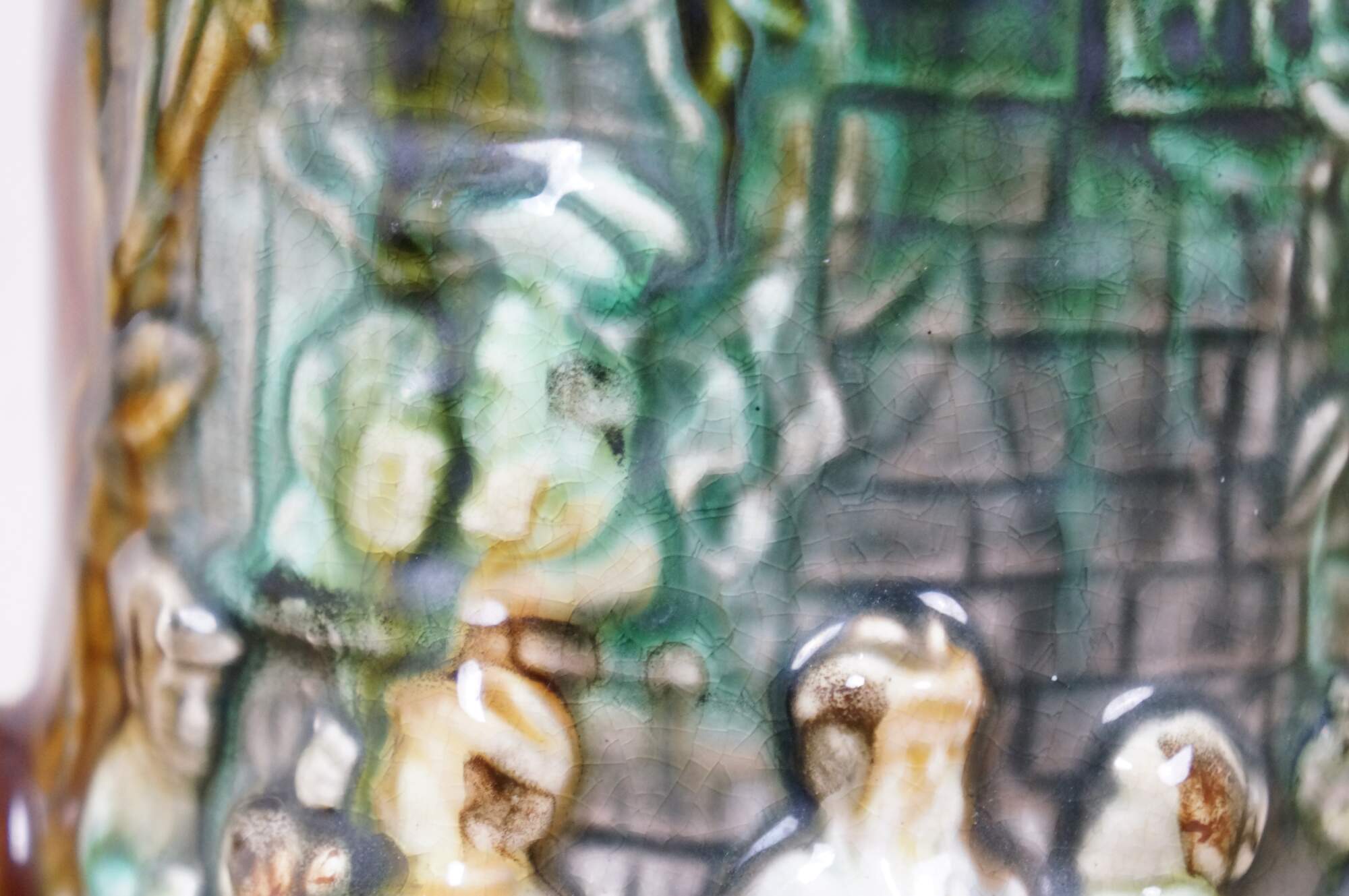
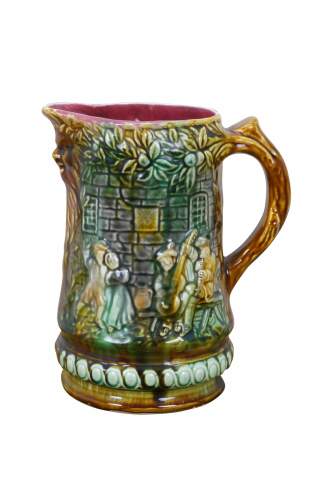
Early 20th century (post-1910) French Majolica porcelain pitcher / jug by La Faïencerie d’Onnaing. Design features a tavern scene with figures and musicians in front of a stone wall, under the fruiting branches of the tree shaped handle, and the watchful eye of the Green Man / Northwind face under the spout. Beaded detail around the base. Brown and green glaze with magenta pink interior. Item number 714 - Frie Onnaing - Made in France.
"La Faïencerie d’Onnaing was founded in Onnaing, France, by Charles, Knight de Bousies, his brother and his cousin Frederick, Baron of Sécus in February of 1821. The three had previously owned the pottery of Nimy-Les-Mons in Belgium and decided to open a second location in France they called Frie Onnaing. In 1827, Alexandre Giraud, acquired the pottery and ran it with his brother Charles Giraud. The two potteries remained in their control until Jean-Pierre and Jean-Baptiste Mouzin became administrators in 1858. The company produced only earthenware faience from its founding until 1838. After this they experimented with a number of different bodies, importing clays from England and other areas in Europe. Their main production remained in plain or simply decorated earthenware and transfer decorated pottery for everyday use— sanitary wares, serving, etc. Around 1870 the company entered the majolica market in a grand way with the production of floral and figural majolica pitchers; vases and jardinieres; smoking paraphernalia; banks; plates, strawberry sets and asparagus sets. It is for their colorful majolica that they are best remembered today. Onnaing pieces have a color palette as well as a similar decorative style to those at the pottery of Nimy-Le-Mons. Flowers were a central theme of their jardinieres and vases although animals were sometimes incorporated into these jardinieres as well. Onnaing pitchers generally take three forms: floral, animal and character. All of these had catalog numbers impressed on the base and many of these had names, usually descriptive in nature, that were used in-house. Pitchers are usually glazed with a deep red interior lining. Human character jugs, for which the company became famous, are common figures from everyday life or well known persons from French history. Onnaing plates are usually cheerful and colorful. Onnaing also made small banks for children, usually in whimsical forms. They also made humidors and smoking sets. The company made a small number of larger pieces for the home such as umbrella stands and pedestals. In 1900 the pottery came under the administration of Hans Mouzin. In 1914 the pottery was damaged during World War 1 and ceased the production of majolica. The pottery resumed production in 1921 and operated until 1938 when the factory closed. The facility was permanently liquidated by 1947. Onnaing majolica pieces are easily found because of the company’s large output. They also had a strong export business to the United States. It is estimated that over a million pieces were potted there. They are sometimes marked with the name of the pottery, sometimes with the company shield, sometimes with an impressed starburst, sometimes with an impressed French horn, and sometimes with only a catalog number. If they were made between 1890 and 1909 they also include the word FRANCE. After 1910 they are marked MADE IN FRANCE. (Etruscan Majolica - The Majolica of Onnaing)
Condition
Good Overall - Crazing
Dimensions
7.5" x 5.75" x 8.5" (Width x Depth x Height)