




Shipping:
Free Shipping Included
Delivery:
Estimated 2-15 Business Days
Payments:
Credit Card, Check, Cash, PayPal, Apple Pay, Venmo
Returns:
30 Days 100% Money Back Guarantee, Buyer Pays Return Shipping
Description
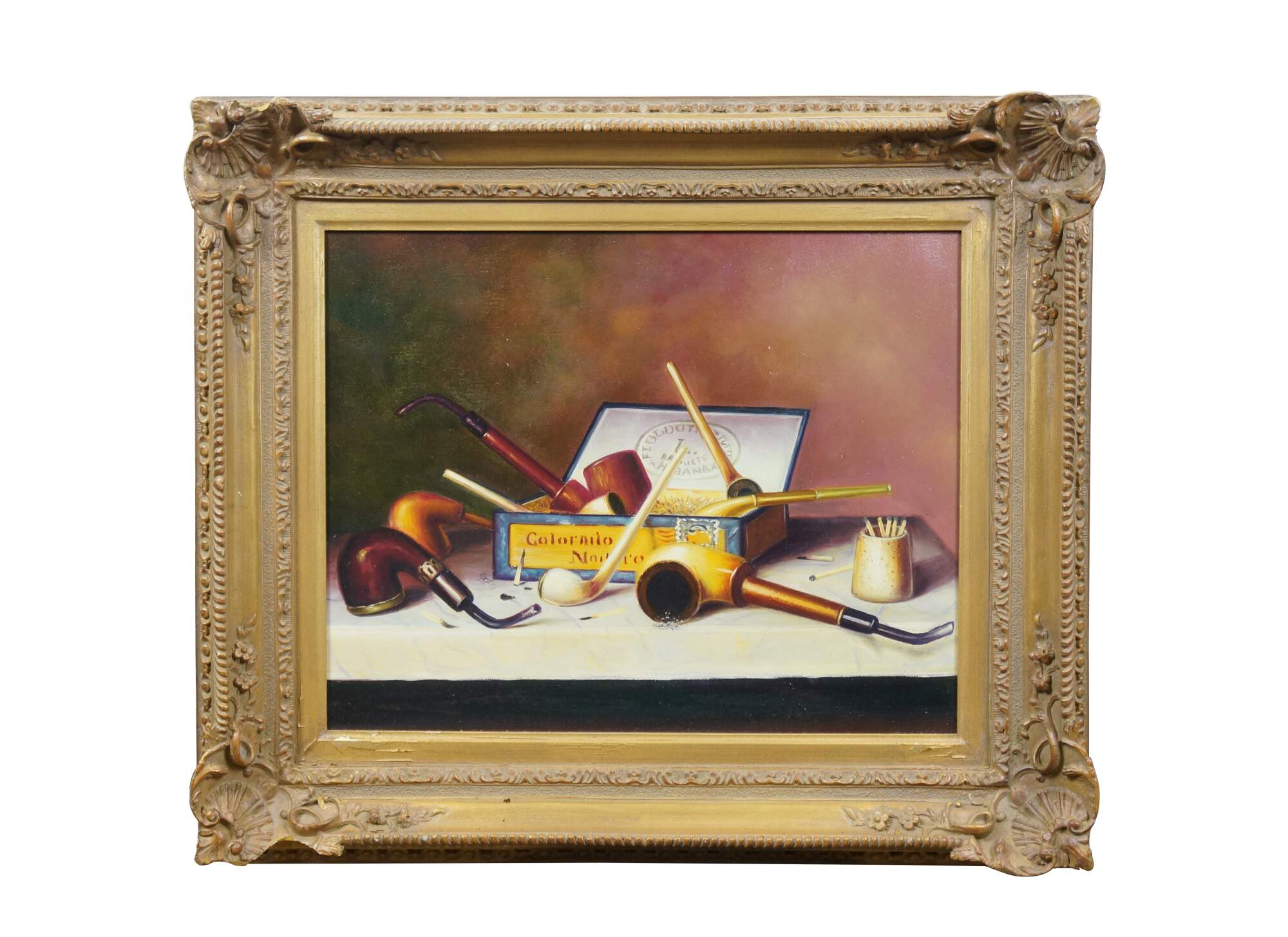
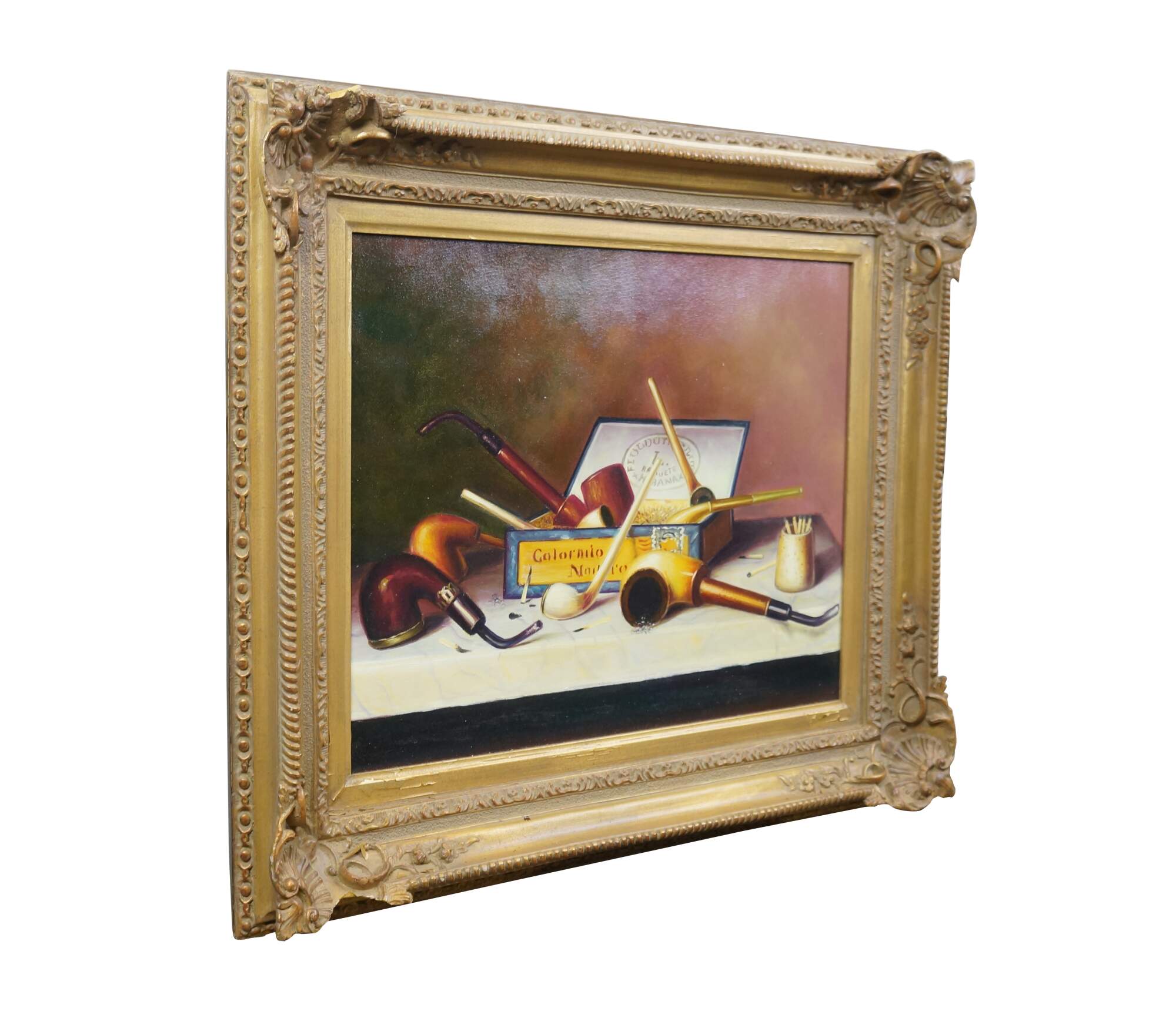
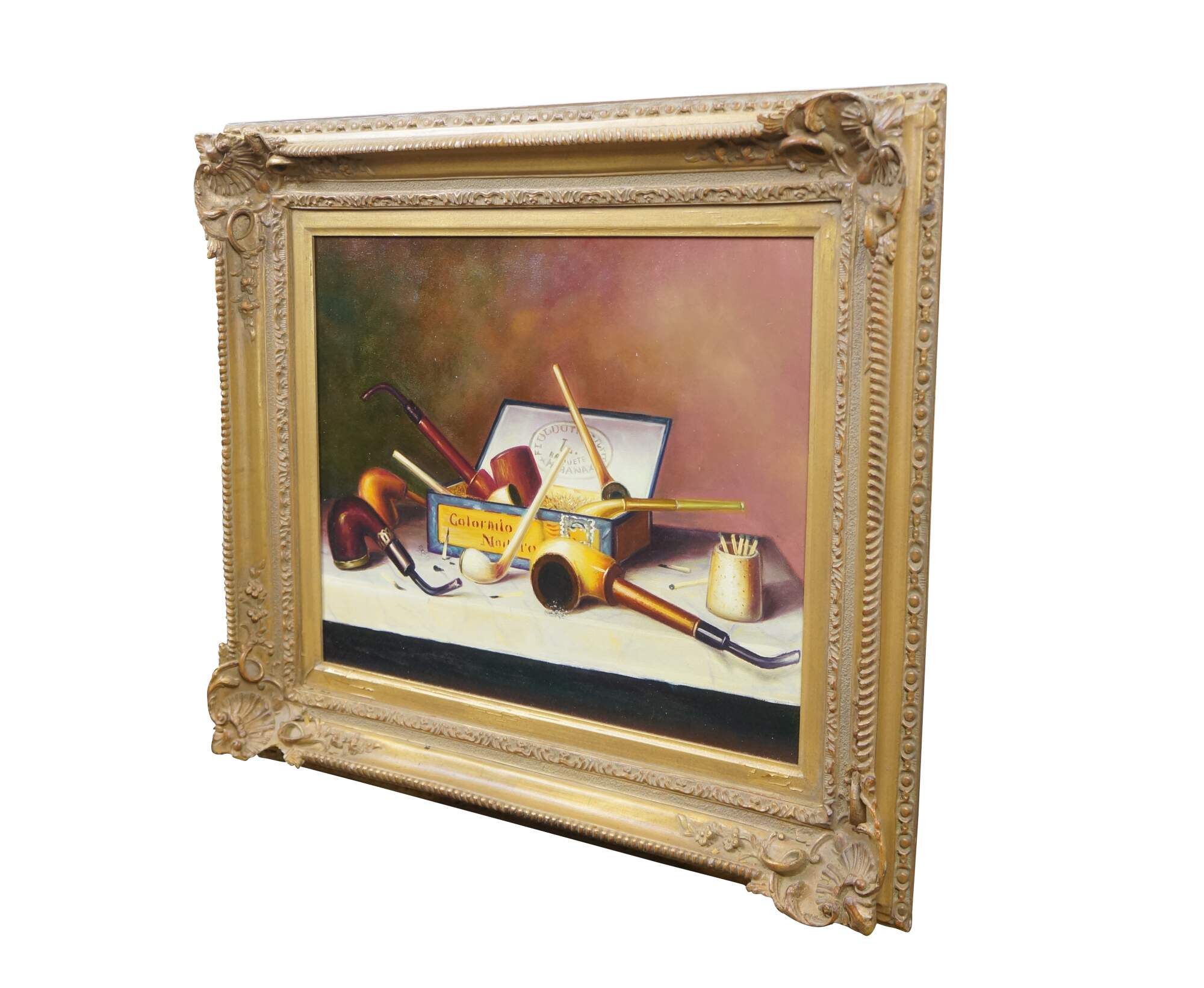
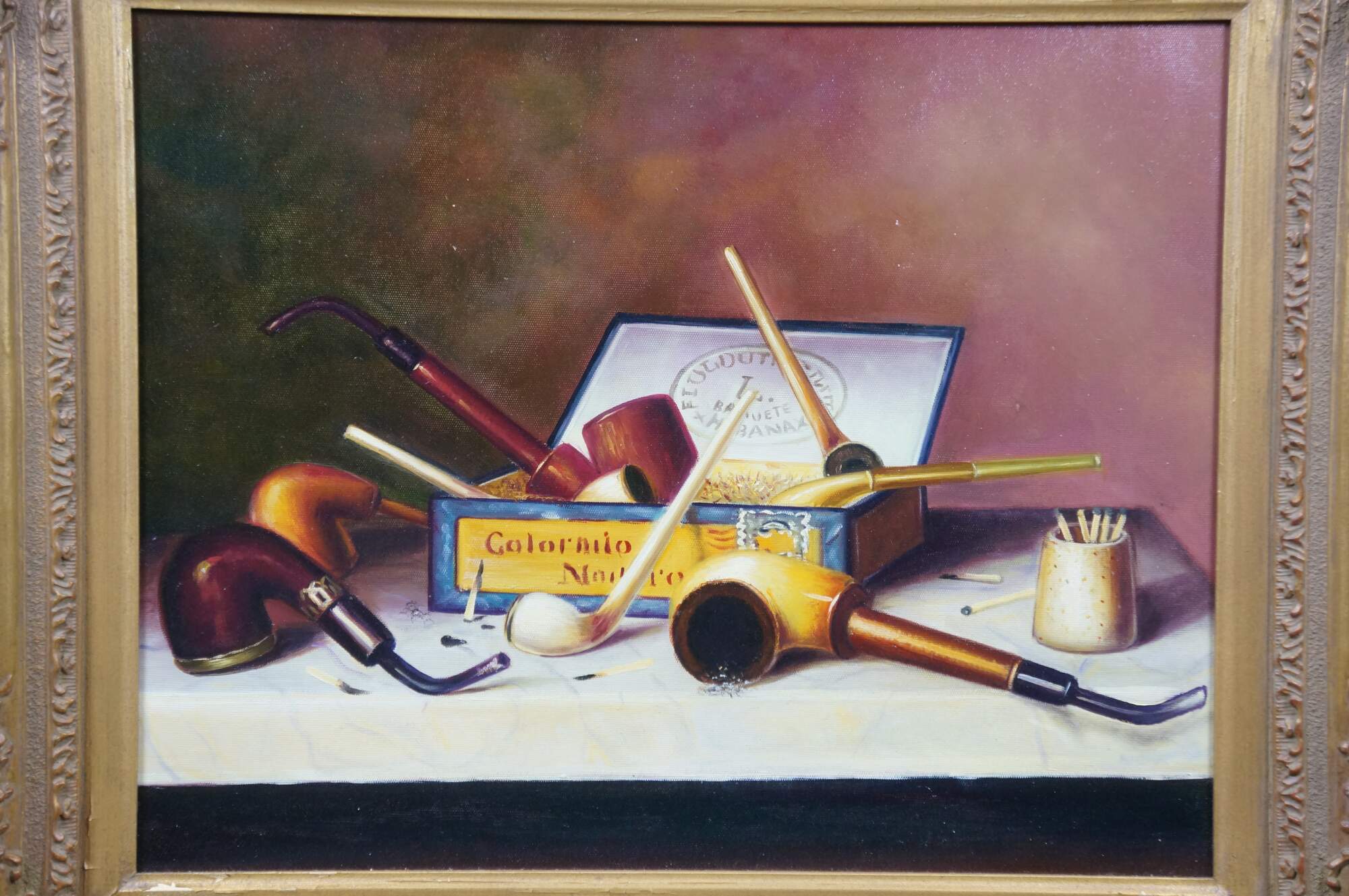
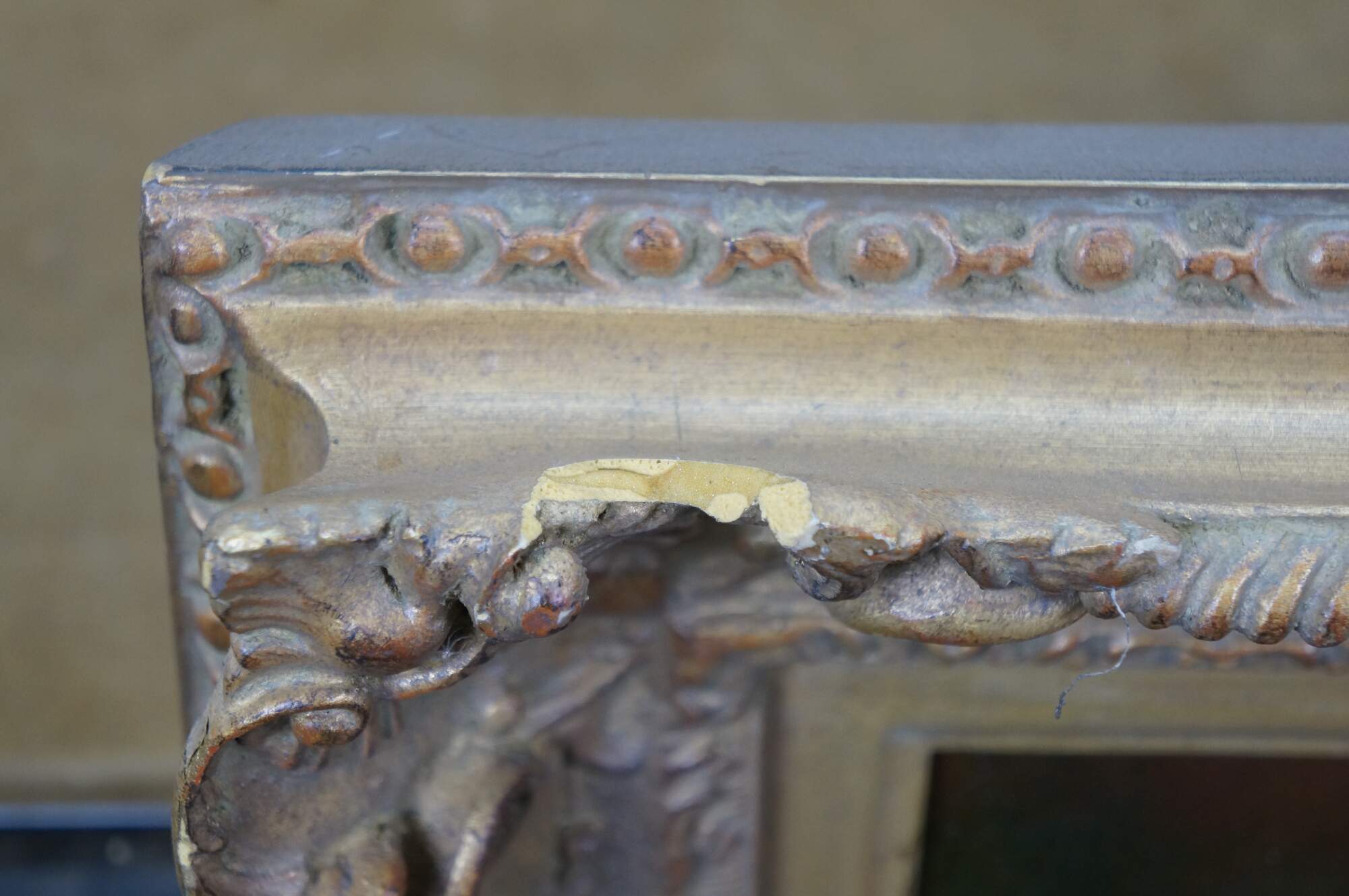
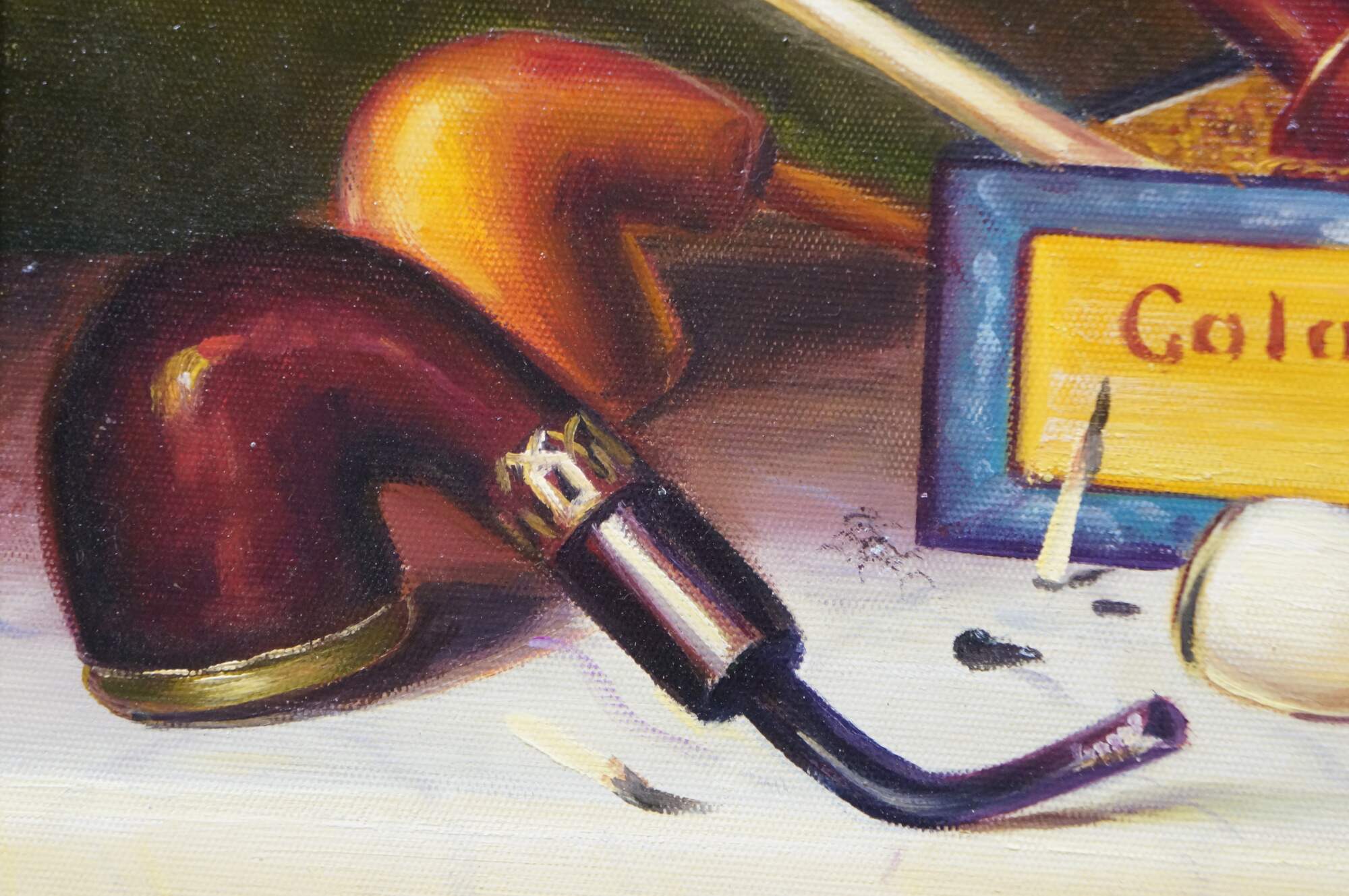
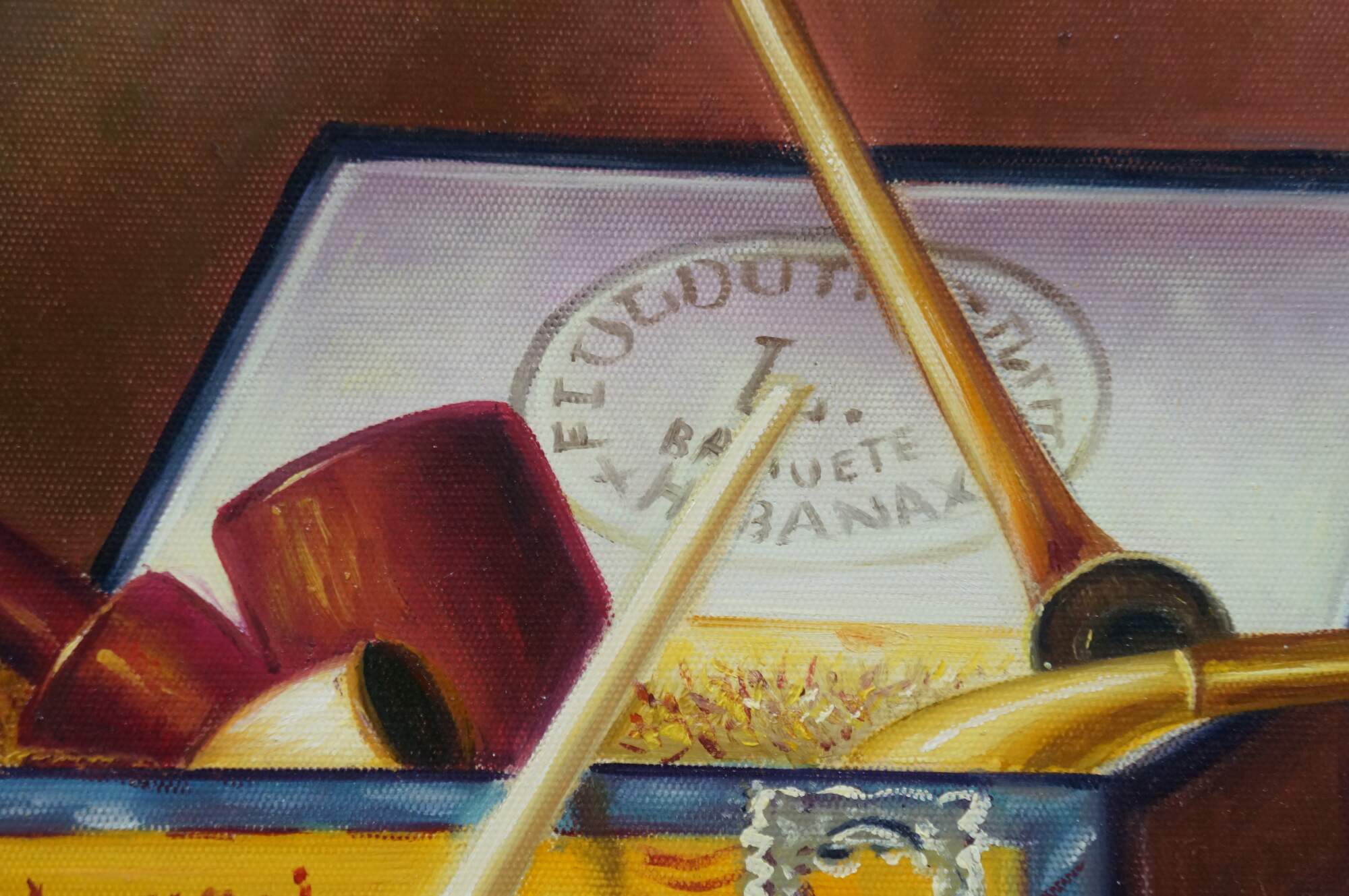
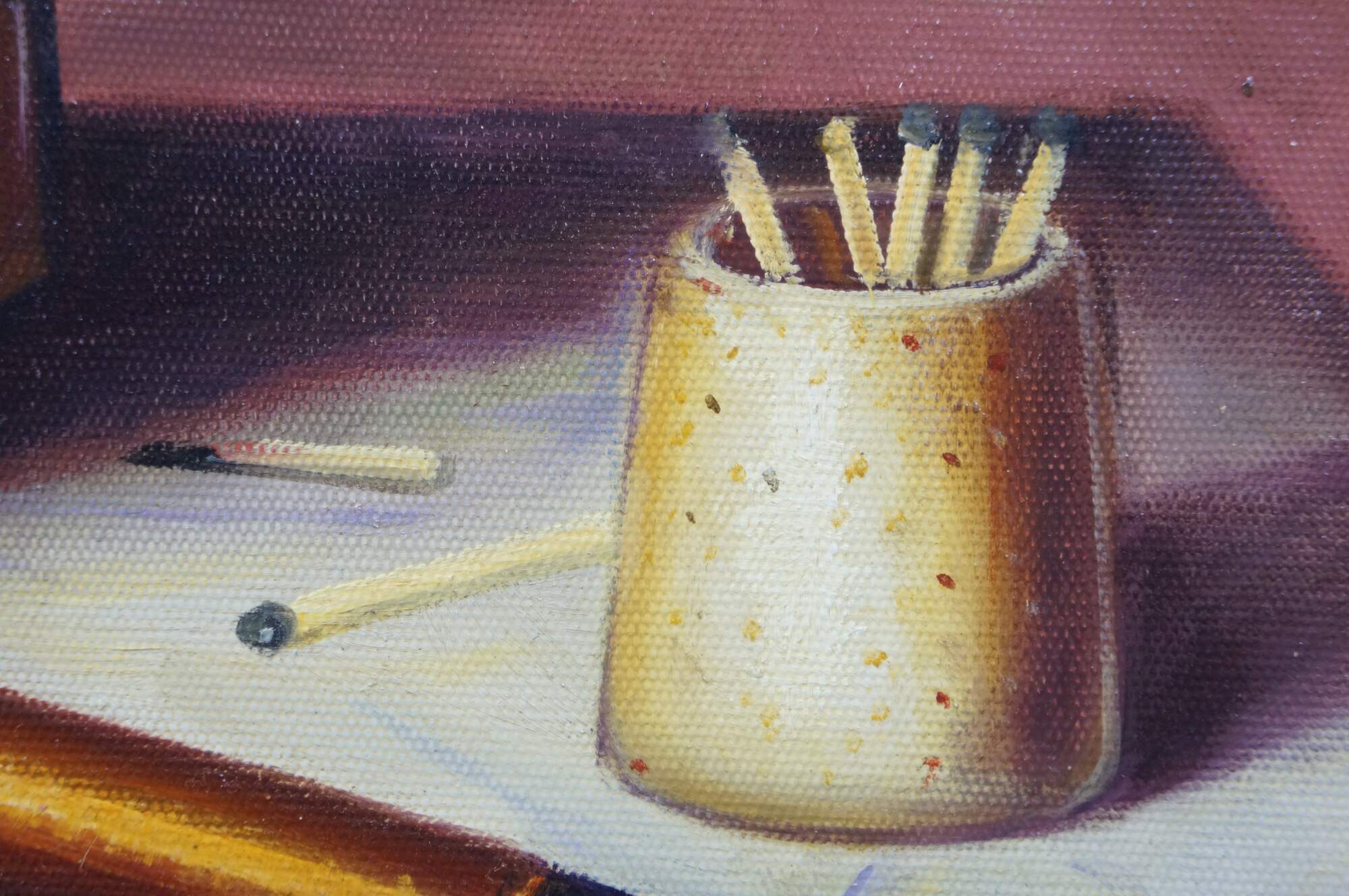
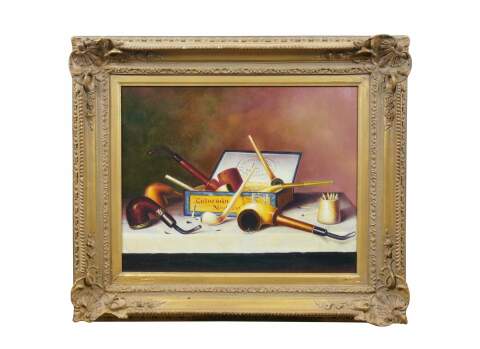
Late 20th century oil on canvas still life painting after "The Social Club" by William Michael Harnett, originally painted in 1879. Realistic still life showing an array of tobacco pipes, matches in a cup, and a cigar box on a white table. Gilt composite frame featuring foliate borders and scallop shell corners.
"William Michael Harnett (1848-1892) was an Irish-American painter known for his trompe-l'œil still lifes of ordinary objects. Born in Clonakilty, County Cork, Ireland on August 10, 1848, Harnett's family emigrated to America shortly after his birth, settling in Philadelphia. Harnett became a United States citizen in 1868 and made a living as a young man by engraving designs on table silver. He also took night classes at the Pennsylvania Academy of the Fine Arts and later, in New York, at Cooper Union and at the National Academy of Design. His first known oil painting, a still life, dates from 1874. The style of trompe-l'œil painting that Harnett developed was distinctive and inspired many imitators. However, it was not without precedent, as several 17th-century Dutch painters, such as Pieter Claesz, had specialized in tabletop still life of astonishing verisimilitude. Raphaelle Peale, working in Philadelphia in the early 19th century, pioneered the form in America. Some of Harnett's most notable works include After The Hunt, a series of four paintings created between 1883 and 1885, featuring hunting equipment and dead game. These paintings are especially effective as trompe-l'œil because the objects occupy a shallow space, meaning that the illusion is not spoiled by parallax shift if the viewer moves." (Wikioo)
Condition
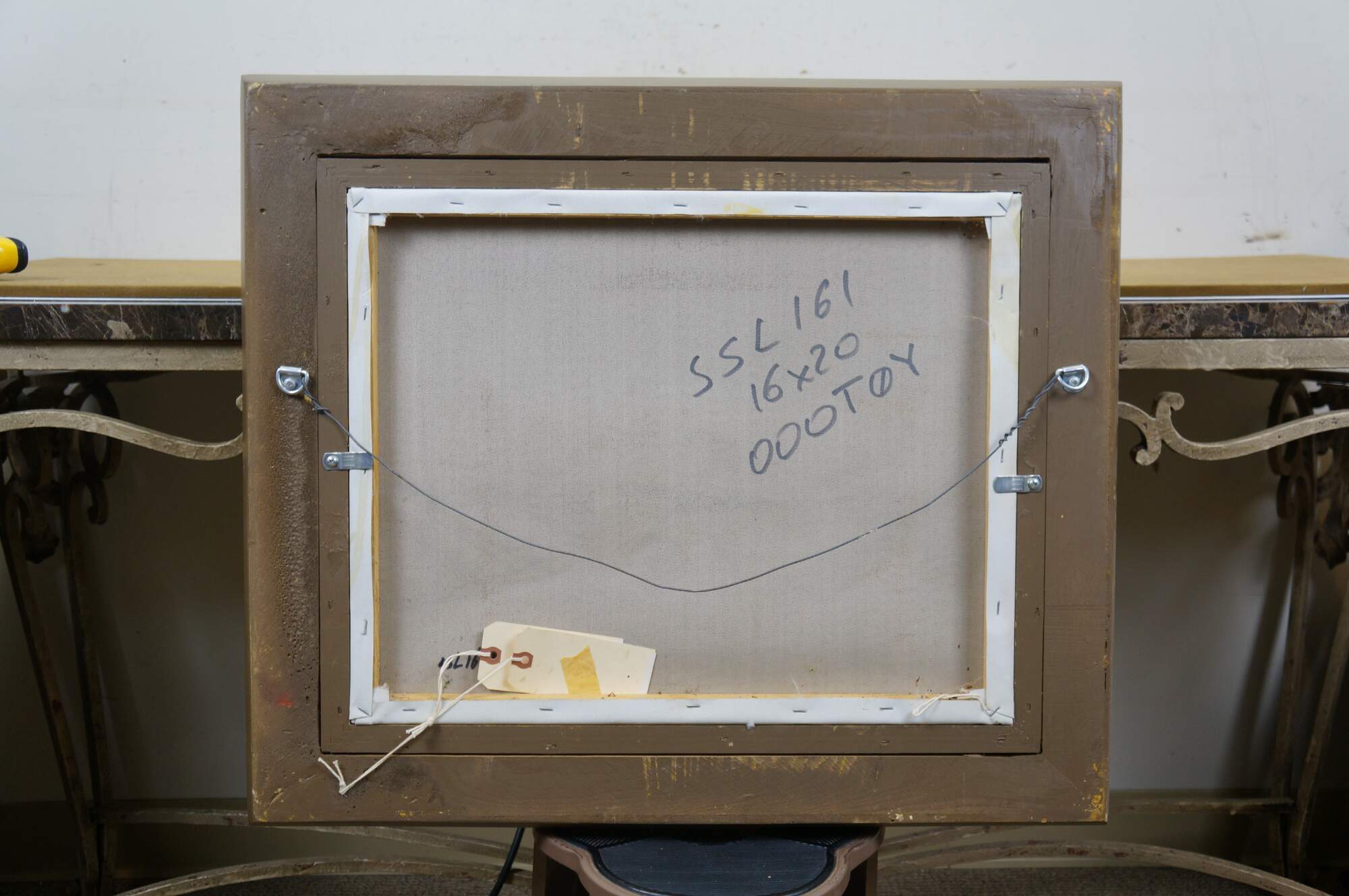
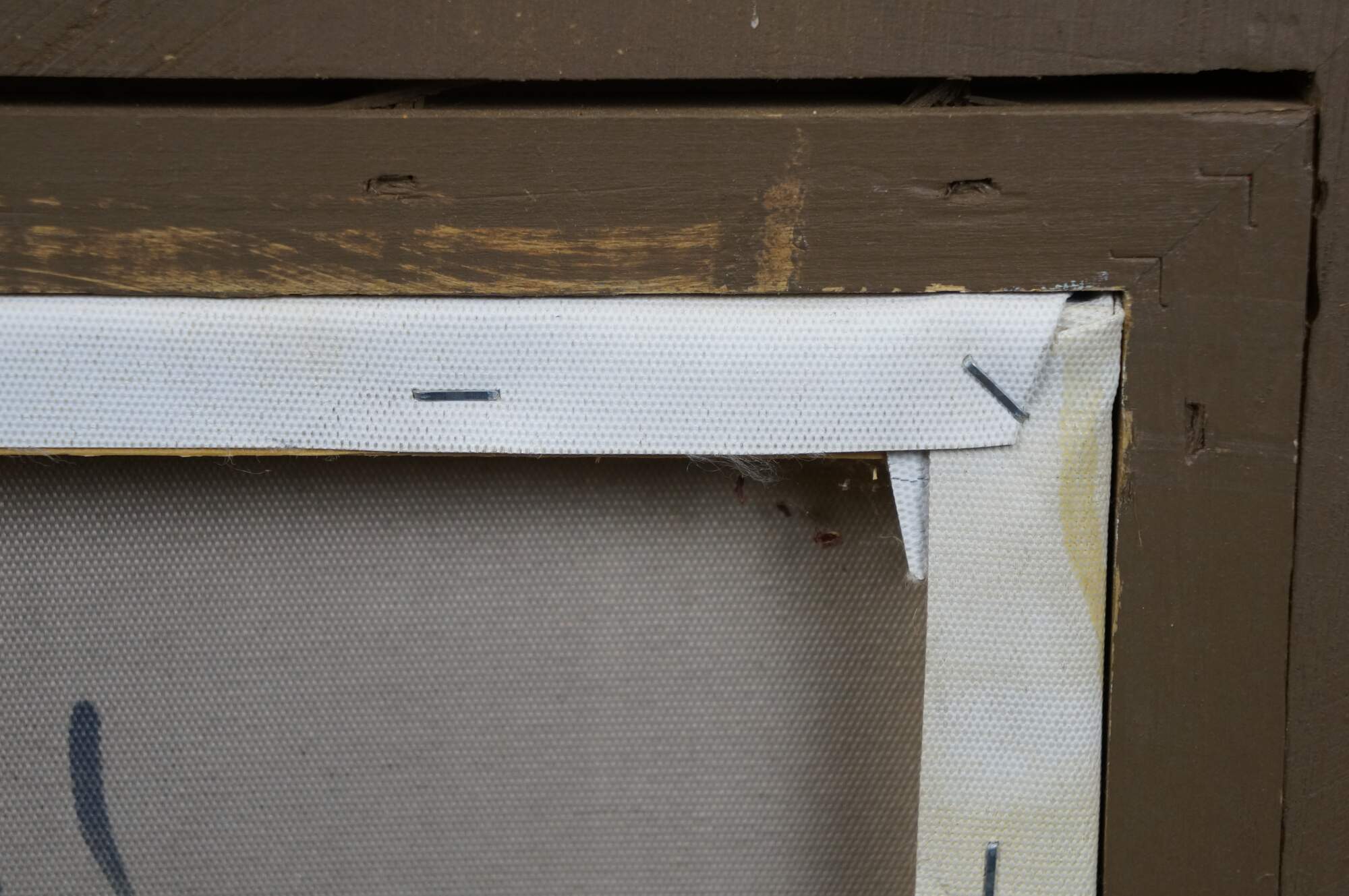
Damage/chipped areas to frame, flaking.
Dimensions
27" x 3" x 23" (Width x Depth x Height)