


Shipping:
Free Shipping Included
Delivery:
Estimated 2-15 Business Days
Payments:
Credit Card, Check, Cash, PayPal, Apple Pay, Venmo
Returns:
30 Days 100% Money Back Guarantee, Buyer Pays Return Shipping
Description
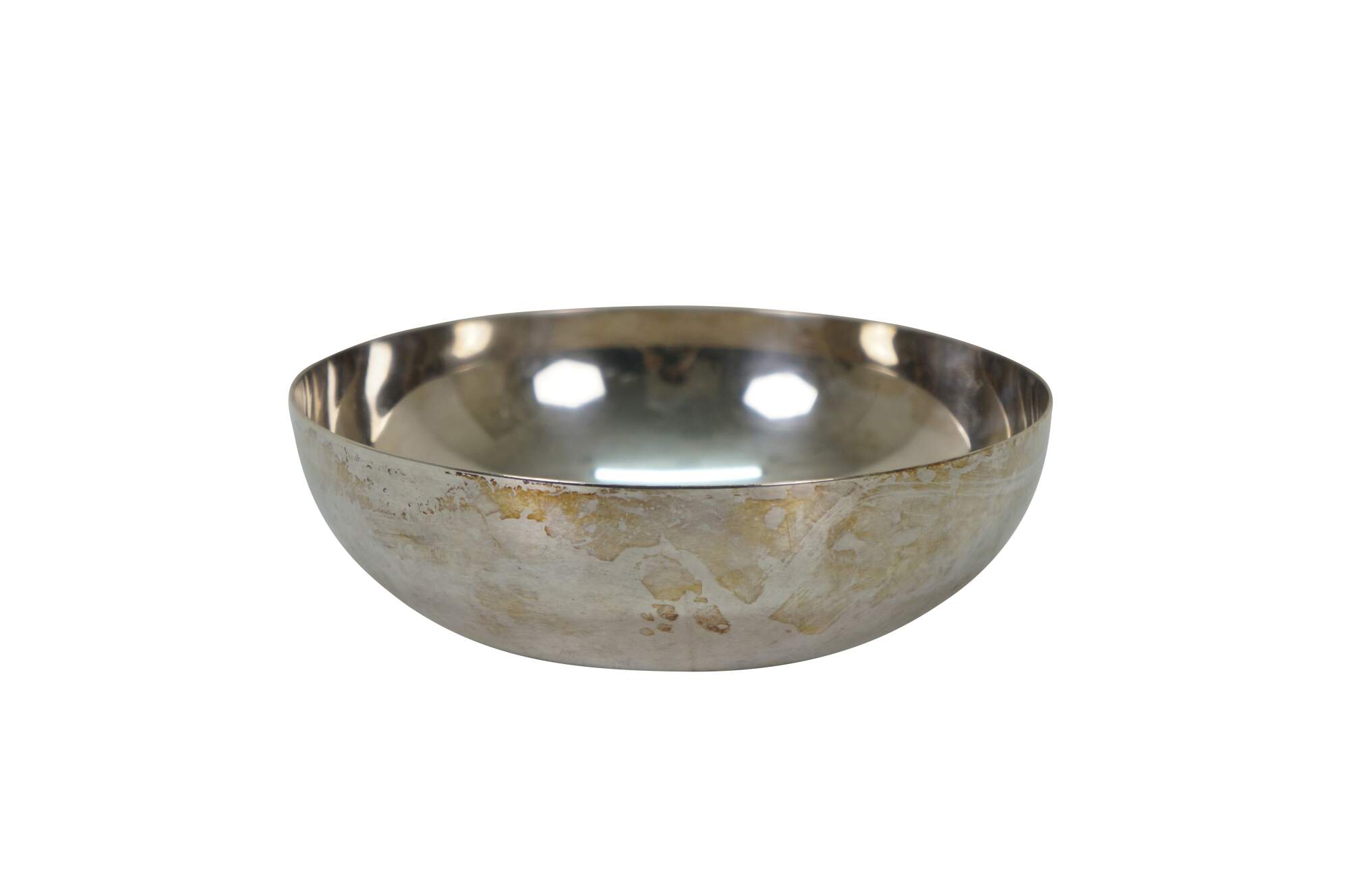
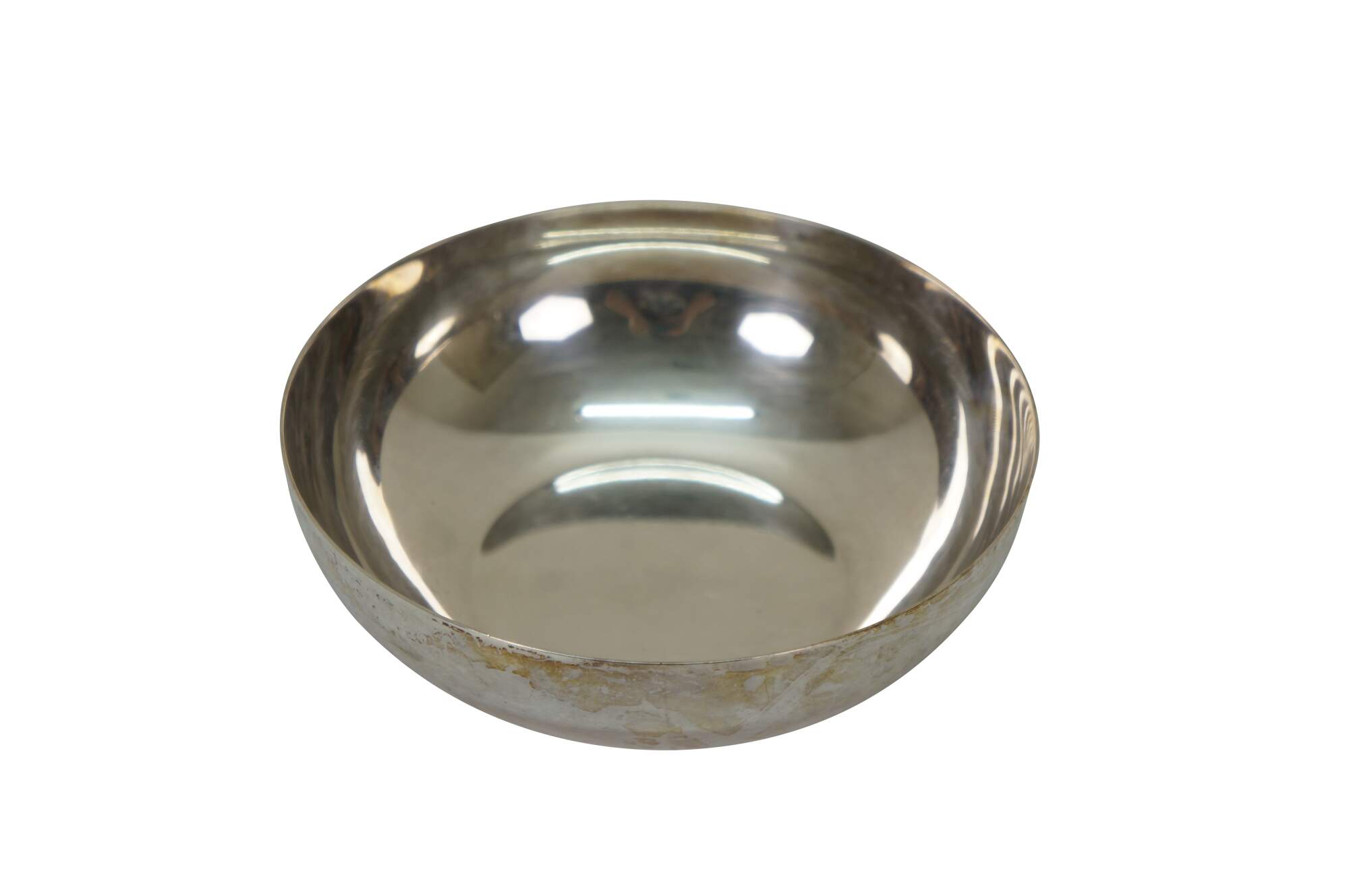
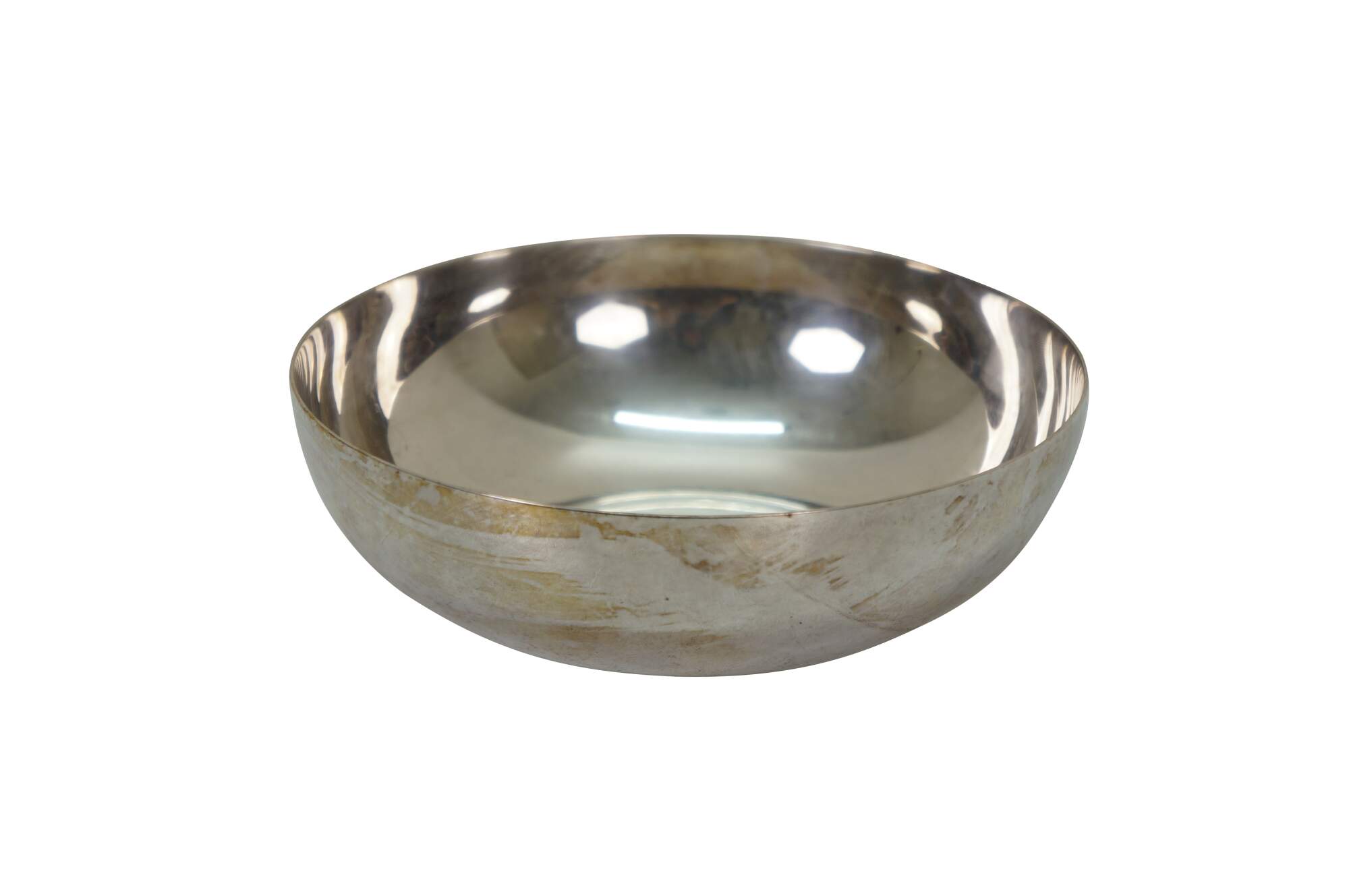
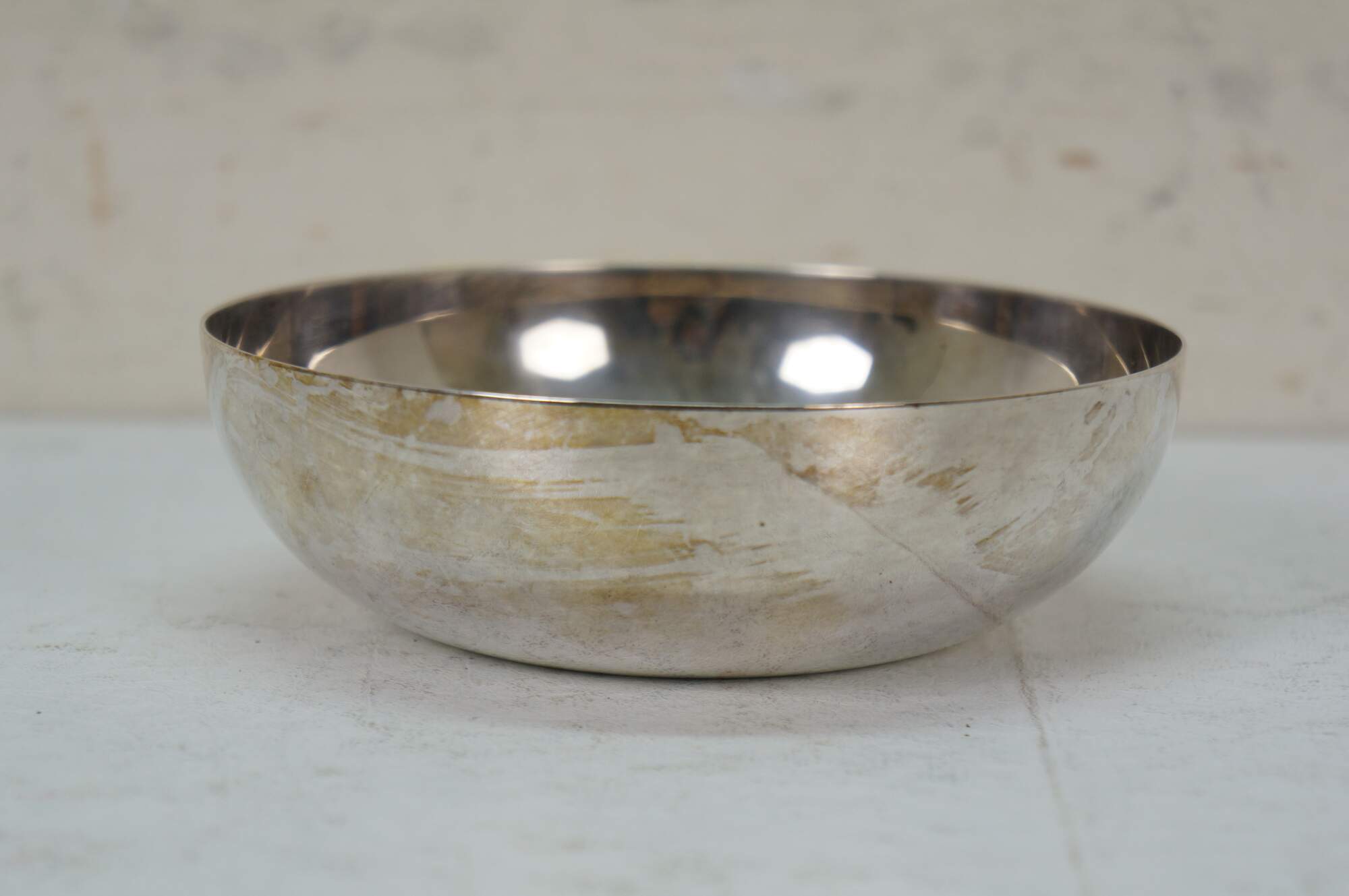
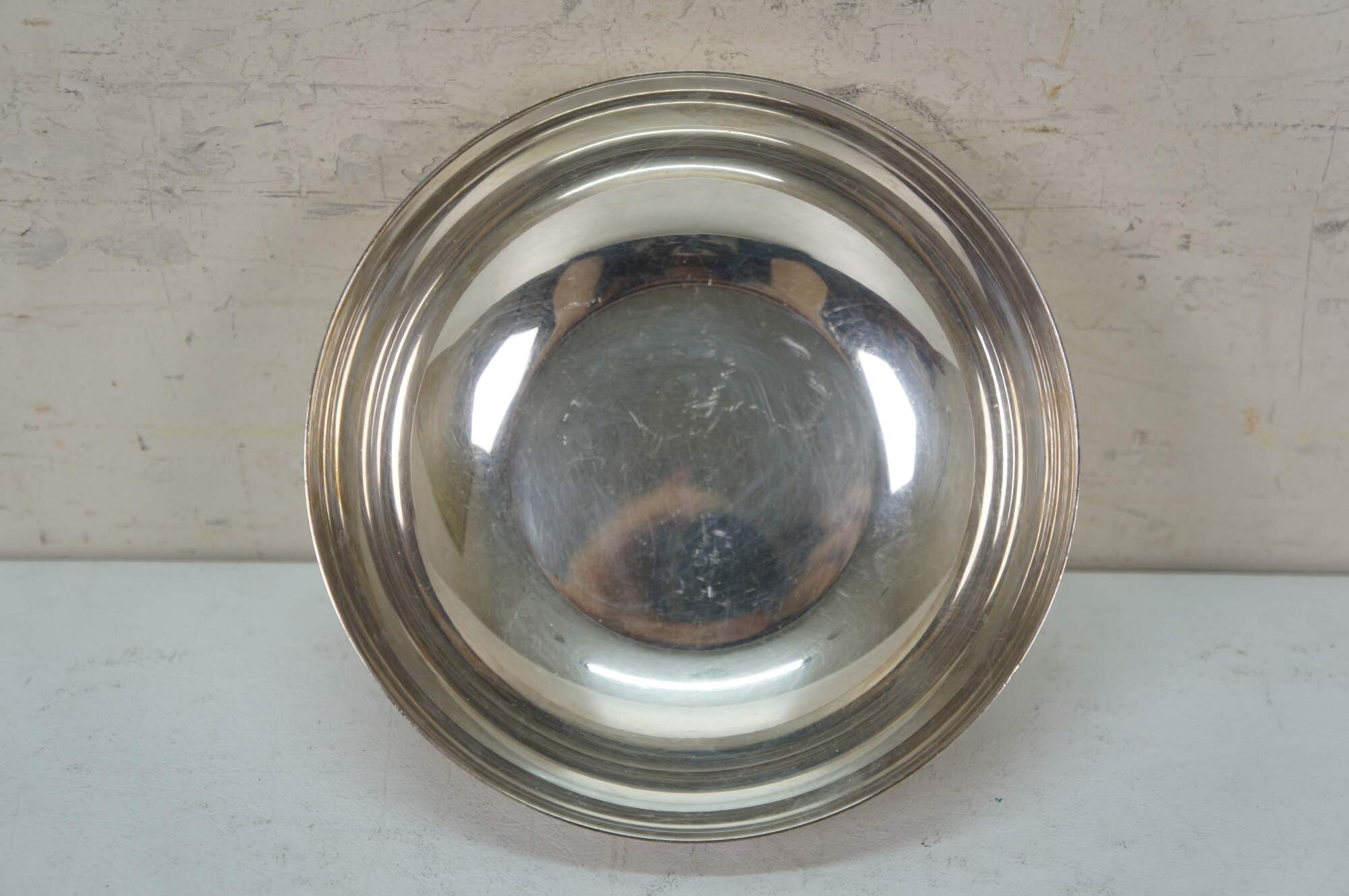
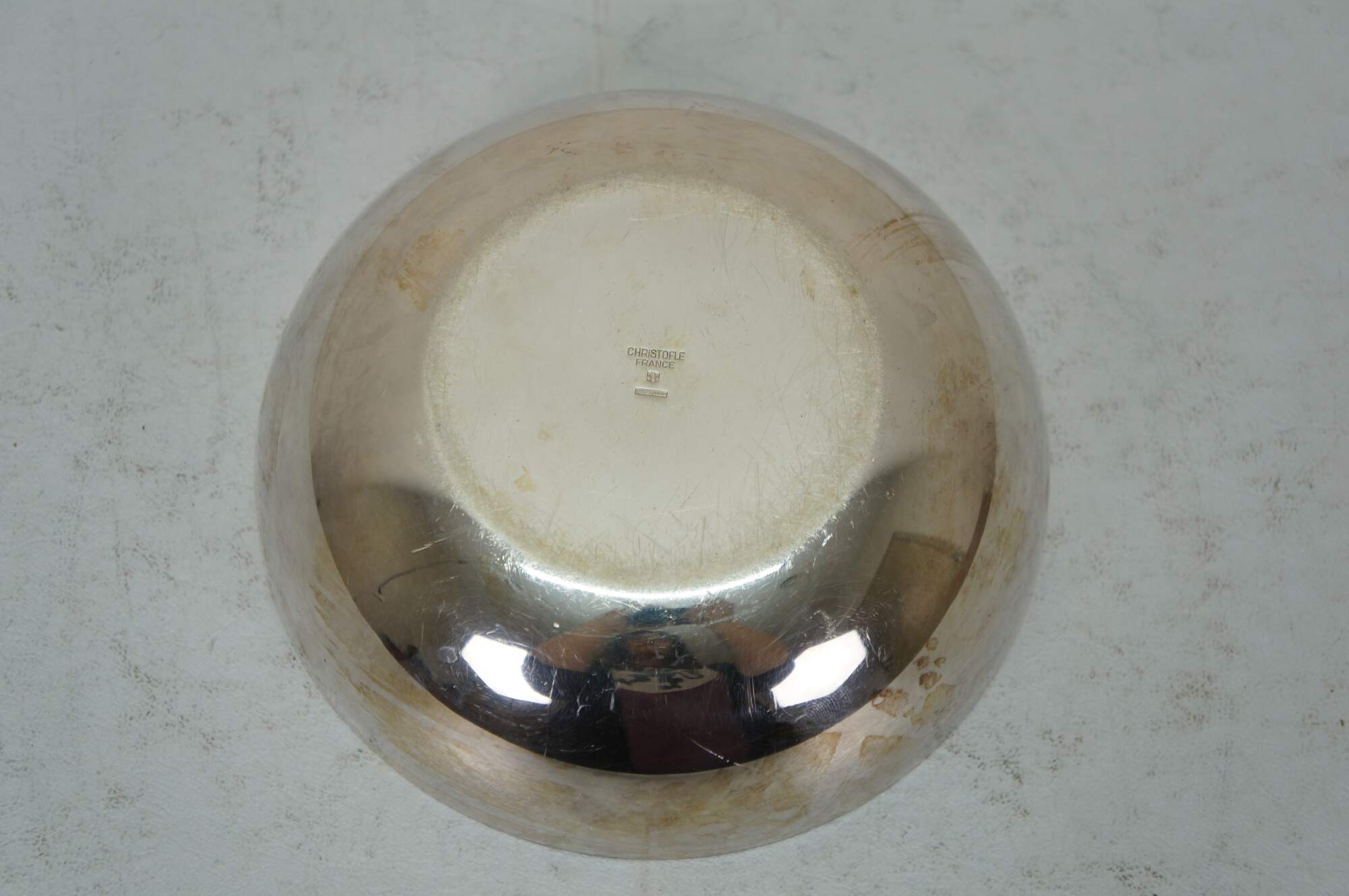
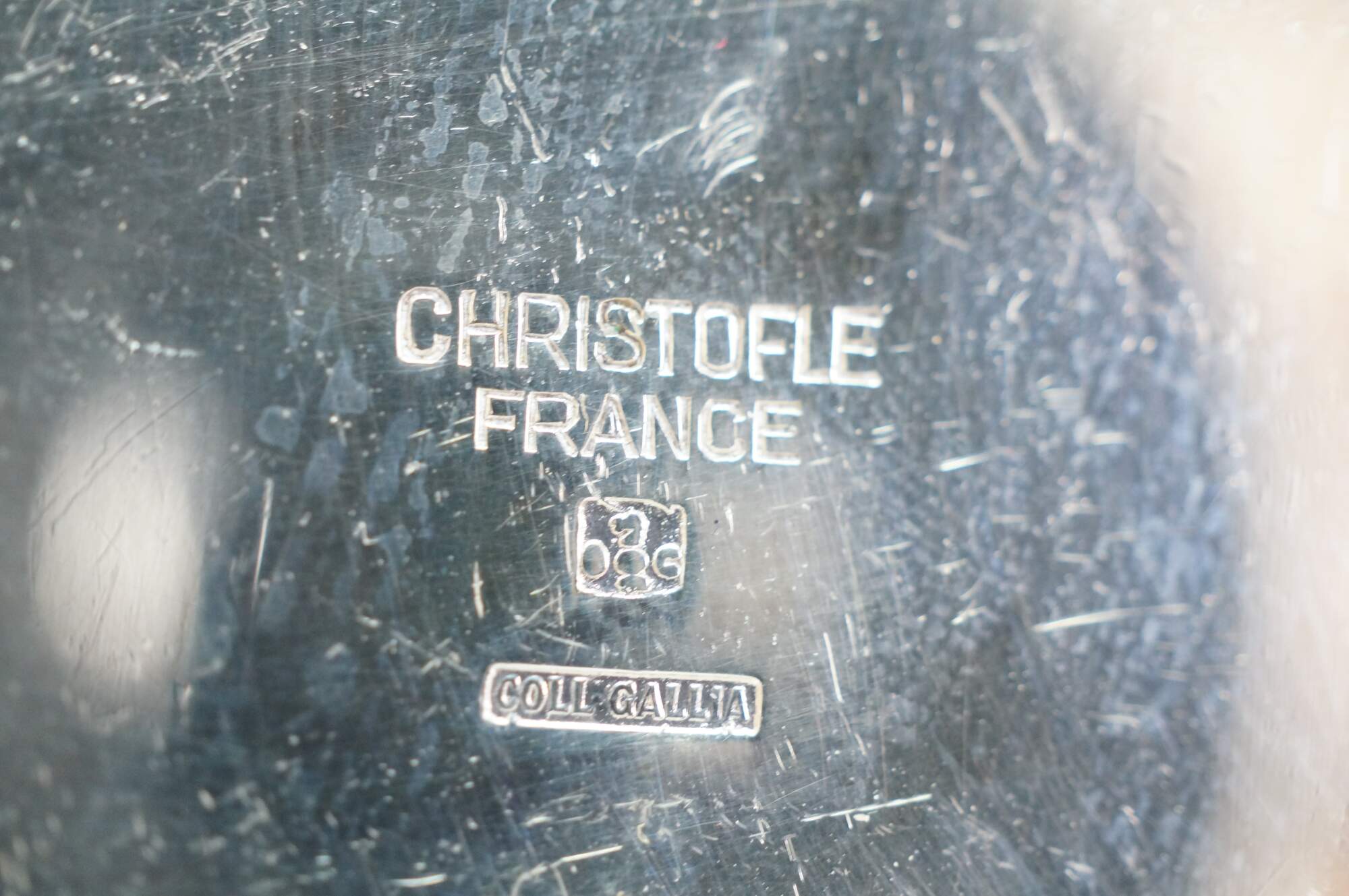
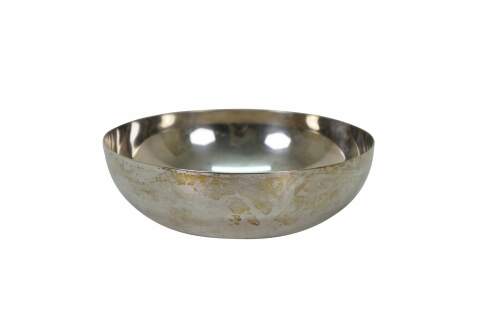
Late 20th century Christofle Coll Gallia round silver plated nut / candy dish / bowl. Made in France.
"Charles Christofle was born in Paris in 1805 amongst small industrialists specializing in the manufacturing of buttons. The only boy in a family of four, he apprenticed with his brother-in-law Hughes Calmette, a manufacturer of "provincial" copper jewelry in 1821. He took over the business 10 years later, founding the company that bears his name in 1830, and in 1832 deposited his master's mark at the Garantie de Paris for "adornment". He developed his factory by positioning it towards export jewelry made of precious metal. The following year, he married Anne Henriette Bouilhet (1819 -1839) with whom he had two children, a daughter Marie Rose (1836-1918) and a son Paul (1838 -1907). While searching for technical innovations, Charles Christofle took out a patent for the manufacturing of metallic fabrics in 1837. He then produced silver filigree pieces and hangings, epaulettes and braids for the army. Armed with this diverse skillset, he participated in the Exhibition of Products of French Industry in Paris in 1839. This first participation inaugurated a long series of national and universal exhibitions, where the House would win numerous awards. At one exhibition in 1844 in Paris, he received a gold medal. In 1842, Charles Christofle acquired the patents for silver and gold metal electroplating from the Frenchman Henri de Ruolz and the Englishman Elkington. More durable and less harmful than traditional techniques, electroplating and gilding made it possible to manufacture pieces on a massive scale. Christofle was the only patent holder in France for 15 years. One of his first clients was the French King, Louis-Philippe I, who ordered a full service from him for the Chateau d'Eu in Normandy, a vacation spot for the French royal family. The company became famous after Emperor Napoleon III ordered a 4,000-piece service, including the surtouts, in 1851. The centerpiece of the goldsmith's surtouts was recovered from the ruins of the Tuileries Palace and is now in the Museum of Decorative Arts. Its titles of "Goldsmith of the King" and "Supplier of the Emperor" allowed the house to become famous and to be solicited by foreign sovereigns such as the Emperor Maximilian of Mexico, the Tsar of Russia, the German Kaiser, the Austro-Hungarian Empire, the Sultan Abdülaziz of the Ottoman Empire. When Charles Christofle died, his son Paul (1838-1907) and his nephew Henri Bouilhet (1830-1910) succeeded him and continued to develop the company. Thanks to the development of new techniques (massive electroplating, enamels, patinas, natural impressions) and the opening of new factories (Saint-Denis and Karlsruhe), Christofle became one of the major goldsmiths of the century. Its collections cover not only tableware and decoration, but also objets d'art, decorative statuary, prizes for races or agricultural competitions, and monumental decor for gilding, for example the decorations on the roof of the Opéra Garnier." (Christofle / Wikipedia)
Condition
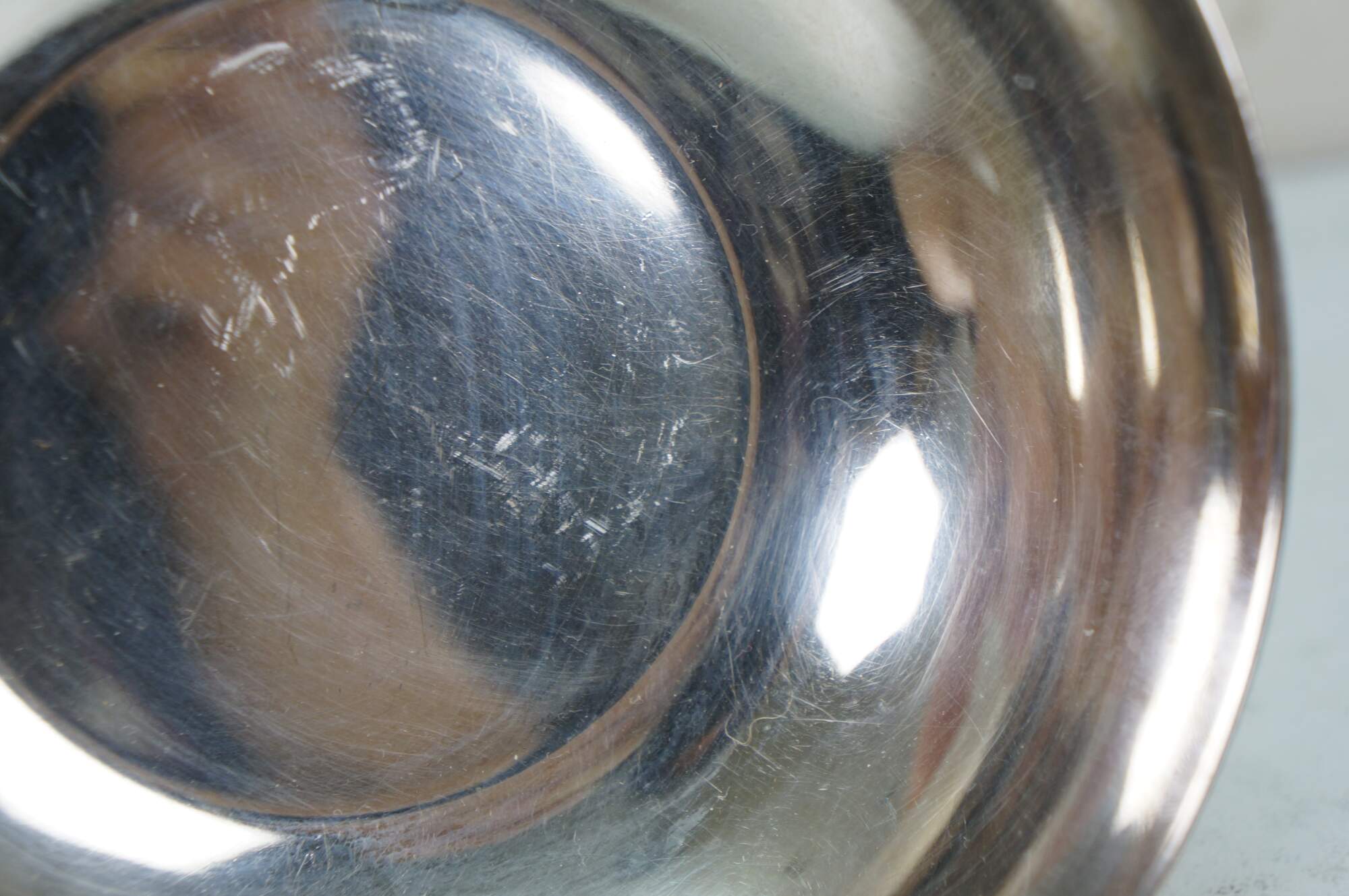
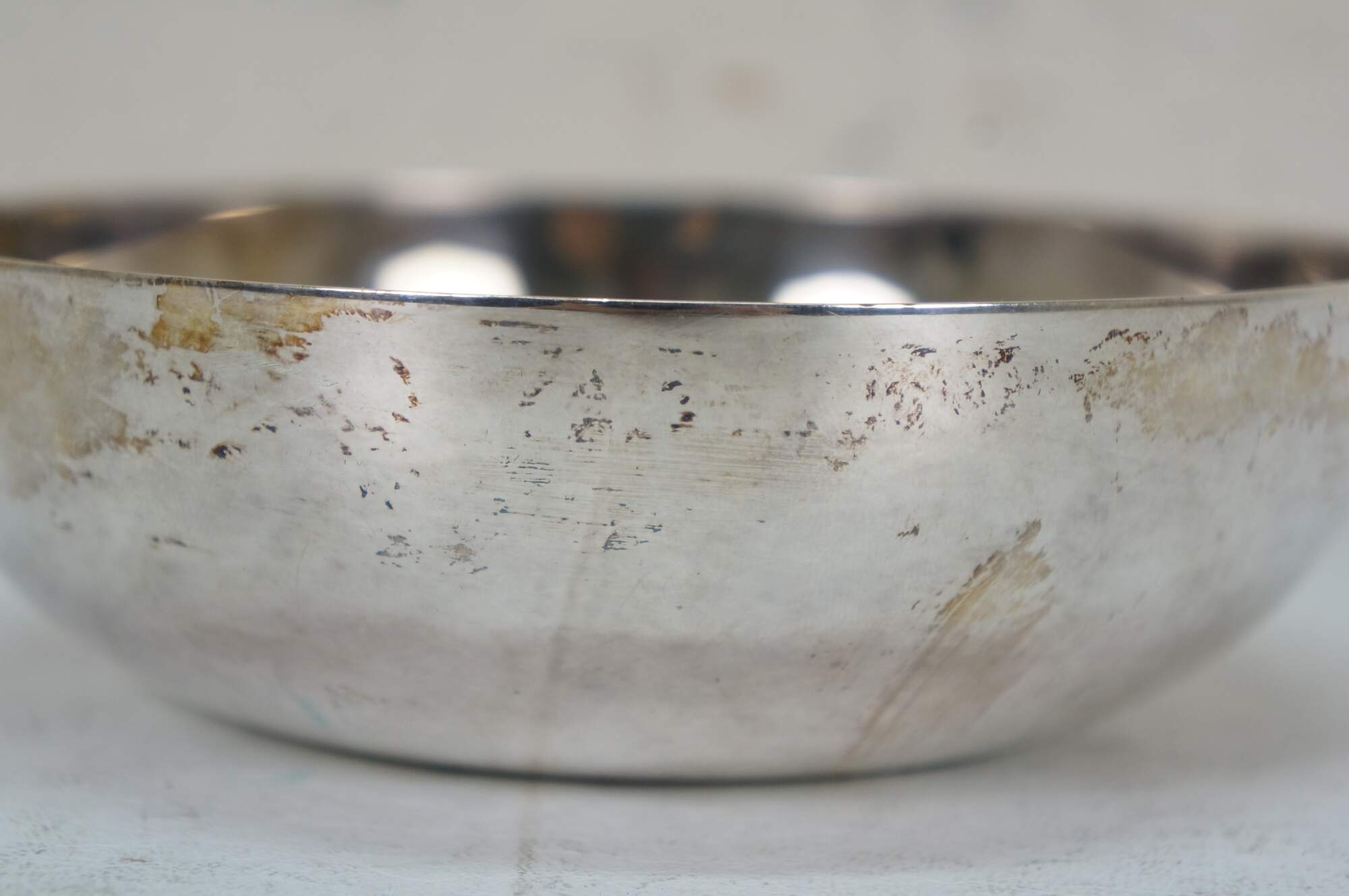
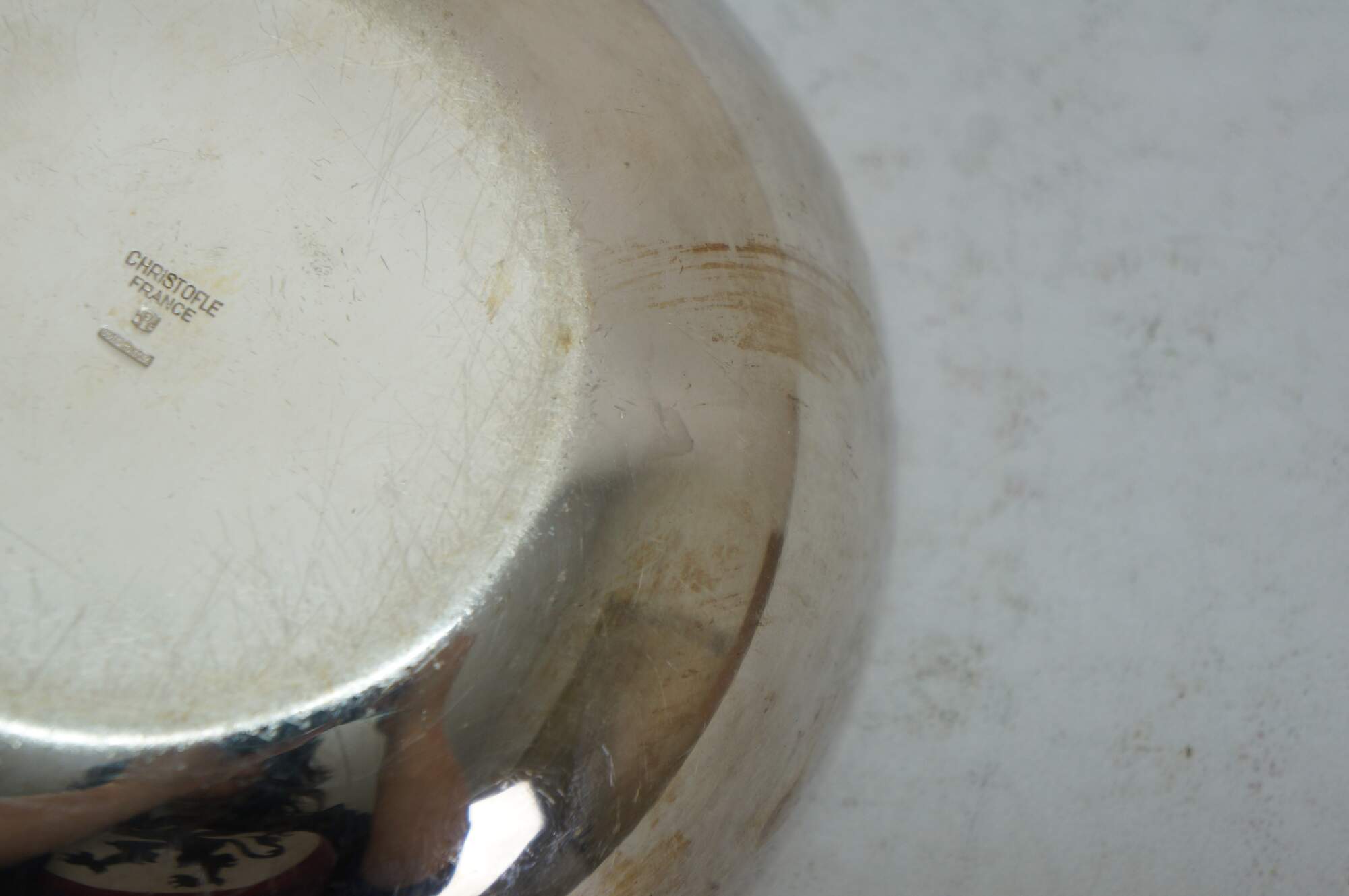
Good Overall - Some tarnish/scrapes
Dimensions
5.5" x 1.75" (Diameter x Height)